Choosing the right tires for your vehicle can make a huge difference in your safety and driving comfort. You might be wondering whether all terrain tires or winter tires are better for your needs.
Both have unique features designed for specific conditions, but which one suits your driving style and environment? Keep reading, and you’ll discover the key differences that will help you make the smartest choice for your car and your peace of mind this season.
Credit: www.lesschwab.com
Tire Types And Uses
Tire types vary based on the driving conditions and terrain. Choosing the right tire improves safety and performance. Two common types are all terrain tires and winter tires. Each has unique features designed for specific uses.
Understanding these tires helps you pick the best one for your needs. This section explains their basics, features, and when to use them.
All Terrain Tires Basics
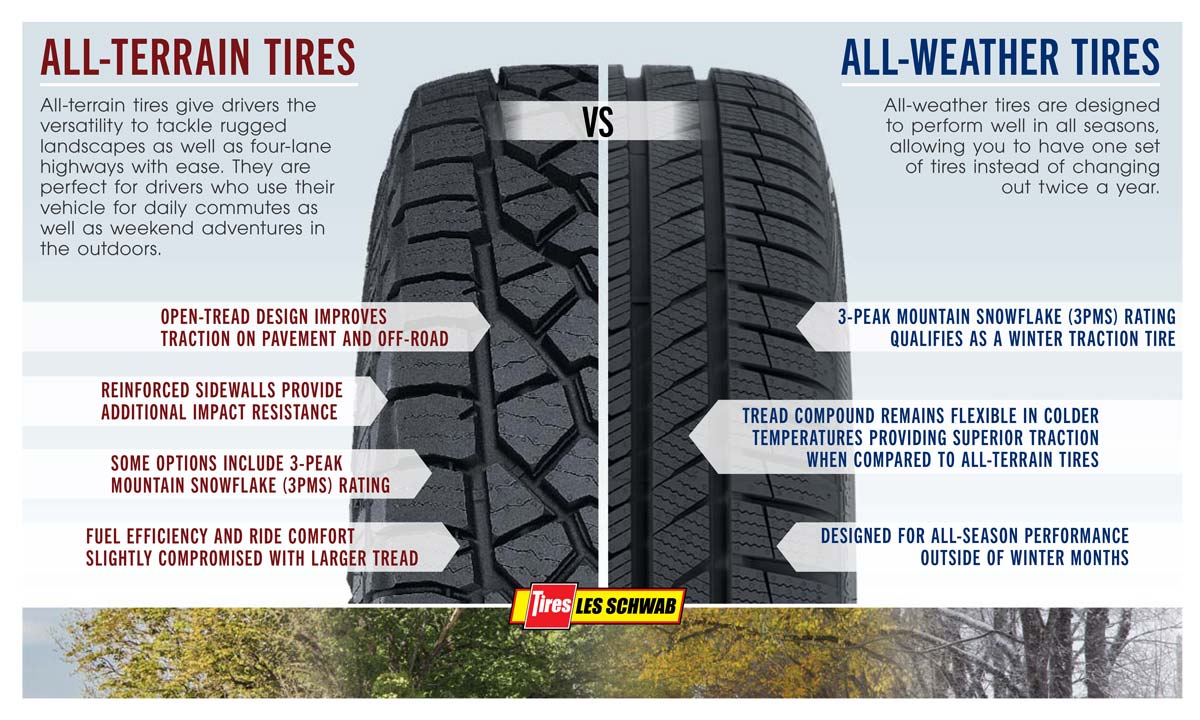
All terrain tires are made for mixed driving conditions. They work well on highways, dirt roads, and light off-road trails. Their tread pattern is deeper and more aggressive than regular tires. This design helps grip loose surfaces like gravel and mud.
These tires balance comfort and durability. They also offer good traction on wet and dry roads. All terrain tires last longer than winter tires in normal weather.
Winter Tires Features
Winter tires are built for cold weather and snow. They use special rubber that stays soft in freezing temperatures. This keeps the tire flexible and improves grip on ice and snow.
The tread on winter tires has many small grooves called sipes. These sipes help bite into snow and ice. Winter tires also have deeper tread depth to move snow away from the tire.
When To Choose Each Type
Choose all terrain tires if you drive on varied surfaces year-round. They suit mild winter areas with little snow. These tires are good for outdoor activities and road trips.
Winter tires are best for regions with heavy snow and ice. They increase safety by improving traction in cold months. Swap to winter tires before temperatures drop below 45°F (7°C).
Using the right tire type ensures better control and reduces risks on the road.
Performance On Different Surfaces
Choosing the right tire affects how your vehicle performs on different surfaces. Tires change how you drive in snow, mud, dirt, or dry roads. Understanding the strengths of all terrain and winter tires helps you pick the best for your needs.
Grip On Snow And Ice
Winter tires have special tread patterns and soft rubber. They stay flexible in cold weather. This helps them grip snow and ice better. All terrain tires can handle light snow but do not perform well on ice. Winter tires provide safer stops and better control on slippery roads.
Handling On Mud And Dirt
All terrain tires have deep treads and large gaps. This design clears mud and dirt fast. It prevents slipping and keeps traction strong on rough surfaces. Winter tires struggle here because their tread is made for snow, not mud. For off-road or muddy paths, all terrain tires work best.
Dry Road Traction
All terrain tires often offer better dry road grip than winter tires. Their harder rubber and tread design suit warm, dry conditions. Winter tires can feel soft and wear out faster on dry roads. This softness reduces traction and increases fuel use. Choose tires that match your usual driving surface for best results.
Tread Patterns And Rubber Compounds
Tread patterns and rubber compounds play a key role in tire performance. They affect grip, safety, and driving comfort. All terrain tires and winter tires differ a lot in these areas. Understanding these differences helps choose the right tire for your needs.
Tread Design Differences
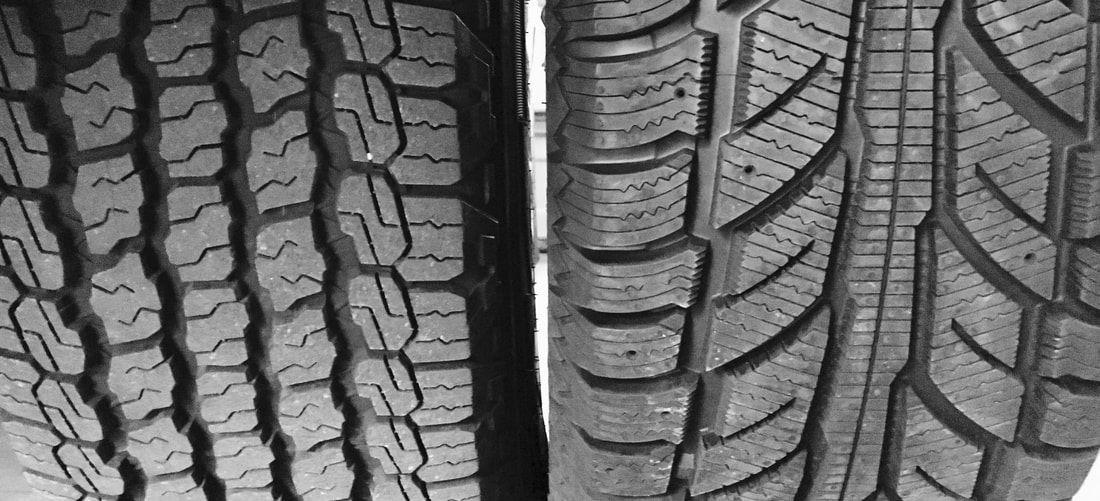
All terrain tires have large, deep grooves to handle dirt and rocks. Their tread blocks are tough and spaced widely to clear mud. Winter tires have smaller, closer tread blocks for more surface contact on ice. They include many tiny cuts called sipes that grip snow and ice well.
Rubber Flexibility In Cold
Winter tires use special rubber that stays soft at low temperatures. This keeps the tire flexible and improves grip on ice. All terrain tires have harder rubber made for durability on rough surfaces. They can become stiff and lose grip in very cold weather.
Self-cleaning Capabilities
All terrain tires have tread patterns that push out mud and stones easily. This prevents clogging and keeps traction strong off-road. Winter tires focus less on mud and more on snow clearing. Their sipes and tread design help shed snow to keep the tire surface clear.
Credit: www.all-terraintires.com
Durability And Wear
Durability and wear are key factors when choosing between all terrain tires and winter tires. Each tire type faces different challenges based on road and weather conditions. Understanding how long they last and how they resist damage helps you make a smart choice.
Longevity In Various Conditions
All terrain tires last longer on dry and rough roads. They have tougher rubber that handles rocks and dirt well. Winter tires wear faster on warm, dry surfaces. Their soft rubber is made for cold and icy roads. Using winter tires in warm weather can reduce their life quickly.
Resistance To Damage
All terrain tires resist cuts and punctures better. Their thick sidewalls protect against sharp objects. Winter tires have less protection but grip ice and snow better. They can get damaged more easily on rough, rocky roads.
Maintenance Tips
Check tire pressure regularly to avoid uneven wear. Rotate tires every 5,000 to 7,000 miles for even use. Clean tires after off-road trips to remove dirt and stones. Store winter tires in a cool, dry place during summer. Keep all terrain tires away from direct sunlight when not in use.
Cost And Availability
Choosing between all terrain tires and winter tires affects your budget and tire availability. Both types serve different driving needs and climates. Understanding the cost and availability helps you make a smart decision for your vehicle.
Price Comparison
All terrain tires usually cost more than winter tires. They have tougher designs to handle rough roads and off-road conditions. Winter tires focus on cold weather grip and often cost less. Prices vary by brand, size, and quality. Expect to pay a bit extra for durability with all terrain tires.
Availability In Markets
Winter tires are widely available in areas with cold climates. Retailers stock them heavily during fall and winter seasons. All terrain tires have steady availability year-round. They suit drivers in mixed weather and off-road conditions. Some stores offer both types online and in physical locations.
Value For Money
Winter tires offer good value if you drive mostly on snow or ice. They improve safety and control in cold weather. All terrain tires provide value for drivers needing versatility all year. They last longer on rough surfaces but may wear faster on smooth roads. Choose based on your driving habits and road conditions.
Safety Considerations
Safety is a key factor when choosing between all terrain tires and winter tires. Tires affect how well your vehicle performs on different road conditions. Understanding their safety differences helps you pick the right option for cold and rough weather.
Stopping Distances
Winter tires have special rubber that stays soft in cold weather. This helps them grip the road better. They reduce stopping distances on snow and ice. All terrain tires are harder and less flexible in cold. They need more distance to stop safely on slippery roads.
Handling In Emergency Situations
Winter tires improve control during sudden turns or stops. Their tread patterns clear snow and slush quickly. This helps maintain traction in emergencies. All terrain tires may slip more on ice or snow. They are better for rough, dry surfaces but less safe on winter roads.
Impact On Vehicle Stability
Winter tires keep your vehicle stable on icy or snowy roads. They prevent sliding and loss of control. All terrain tires provide stability on dirt and rocks. Yet, on winter roads, they can cause wobbling or skidding. Proper tire choice supports safe driving in all conditions.
User Experiences And Reviews
User experiences and reviews give real insights into tire performance. They help understand how all terrain and winter tires work in daily use. People share their stories about safety, grip, and comfort. These reviews guide buyers to make smart choices.
Real-world Performance
Many users say all terrain tires handle well on dry and rough roads. They offer good traction on dirt and gravel. Winter tires shine on snow and ice, providing better control. Drivers notice shorter stopping distances on slippery surfaces. Some find all terrain tires noisy on highways. Winter tires feel softer and quieter in cold weather.
Common Complaints
All terrain tires often wear out faster on smooth roads. Some users report less fuel efficiency with these tires. Winter tires can lose grip on warm, dry roads. A few drivers mention winter tires wear quickly in spring. Both types sometimes feel less comfortable than regular tires. Cost is a concern for many buyers of specialty tires.
Recommended Brands
Several brands get praise for quality and durability. BFGoodrich and Goodyear make popular all terrain tires. Michelin and Bridgestone are known for reliable winter tires. Users appreciate brands offering good warranty and customer service. Checking reviews on specific models helps find the best fit.

Credit: www.youtube.com
Frequently Asked Questions
What Are The Main Differences Between All Terrain And Winter Tires?
All terrain tires offer year-round versatility on various surfaces. Winter tires are specialized for cold, icy, and snowy conditions, providing enhanced grip and safety.
Can All Terrain Tires Replace Winter Tires In Snow?
All terrain tires handle light snow well but lack the deep traction of winter tires. For heavy snow or ice, winter tires are safer and more effective.
How Do Winter Tires Improve Safety In Cold Weather?
Winter tires use softer rubber and unique tread patterns to maintain flexibility. This boosts grip on ice and snow, reducing stopping distances and improving control in cold temperatures.
Are All Terrain Tires Suitable For Off-road Winter Driving?
All terrain tires perform well off-road year-round, including mild winter conditions. However, for icy or deep snow terrains, winter tires provide superior traction and safety.
Conclusion
Choosing between all terrain tires and winter tires depends on your driving needs. All terrain tires work well on many surfaces but lack winter tire grip on ice. Winter tires keep you safer in snow and cold weather. Think about where you drive most and what weather you face.
The right tires help your car perform better and keep you safe. Making a smart choice means better control and peace of mind on the road.