Choosing the right tires can make a huge difference in how your vehicle handles, feels, and performs. If you’ve ever wondered whether pneumatic or cushion tires are better for your needs, you’re not alone.
Understanding the key differences between these two types can save you money, improve safety, and boost comfort. You’ll discover exactly what sets pneumatic and cushion tires apart, so you can make the best choice for your ride. Keep reading—you’re about to unlock the secret to smoother, smarter driving.
Credit: www.wdmatthews.com
Pneumatic Tires Basics
Pneumatic tires are a popular choice for many vehicles and machines. They use air to provide a smooth ride and good traction. These tires are common in cars, bicycles, and some industrial equipment. Understanding their basics helps in choosing the right tire for different needs.
Design And Construction
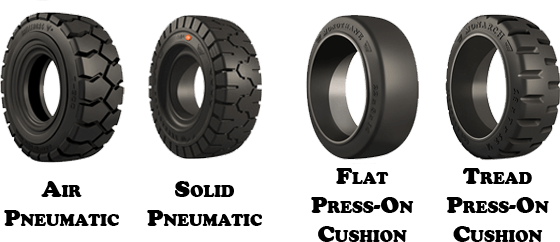
Pneumatic tires have a flexible rubber exterior. Inside, they contain compressed air or nitrogen. This air cushions the impact from the road or ground. The tire also has layers of fabric or steel for strength. The combination keeps the tire durable and comfortable.
Advantages Of Pneumatic Tires
Pneumatic tires absorb shocks well. They provide better grip on rough surfaces. These tires improve vehicle control and safety. Their air pressure can be adjusted to match different loads. This makes them versatile for many uses.
Common Uses
Pneumatic tires are widely used on cars and trucks. Bicycles and motorcycles rely on them for smooth rides. Some heavy machinery uses these tires to reduce vibrations. They are also common in wheelchairs for comfort. Their flexibility suits many types of terrain.
Credit: www.samsmechanical.com
Cushion Tires Basics
Cushion tires are a special type of tire often used on smooth surfaces. They differ from pneumatic tires by their solid design. These tires provide stability and support for heavy loads. Their unique build helps reduce maintenance needs and improve durability.
Understanding cushion tires helps in choosing the right tire for your equipment. They are perfect for specific work environments and tasks. Below, we explore their design, benefits, and common uses.
Design And Materials
Cushion tires have a solid rubber tread mounted on a metal wheel. They do not use air like pneumatic tires. The rubber is thick and tough to resist wear and tear. The metal wheel adds strength and support for heavy loads. This design makes cushion tires durable and low-maintenance.
Benefits Of Cushion Tires
These tires offer excellent stability on hard surfaces. They resist punctures and flats, reducing downtime. Their solid design supports heavy weights safely. Cushion tires require less maintenance than air-filled tires. They also provide a smooth ride on flat, even floors.
Typical Applications
Cushion tires are common in warehouses and factories. They work well on concrete and asphalt floors. Forklifts and industrial trucks often use these tires. Their durability suits indoor environments with smooth surfaces. Cushion tires are not ideal for rough or uneven terrain.
Performance Comparison
Comparing pneumatic and cushion tires reveals key differences in their performance. Each tire type offers unique benefits that suit different needs. Understanding these aspects helps in choosing the right tire for your vehicle or equipment.
Ride Comfort And Shock Absorption
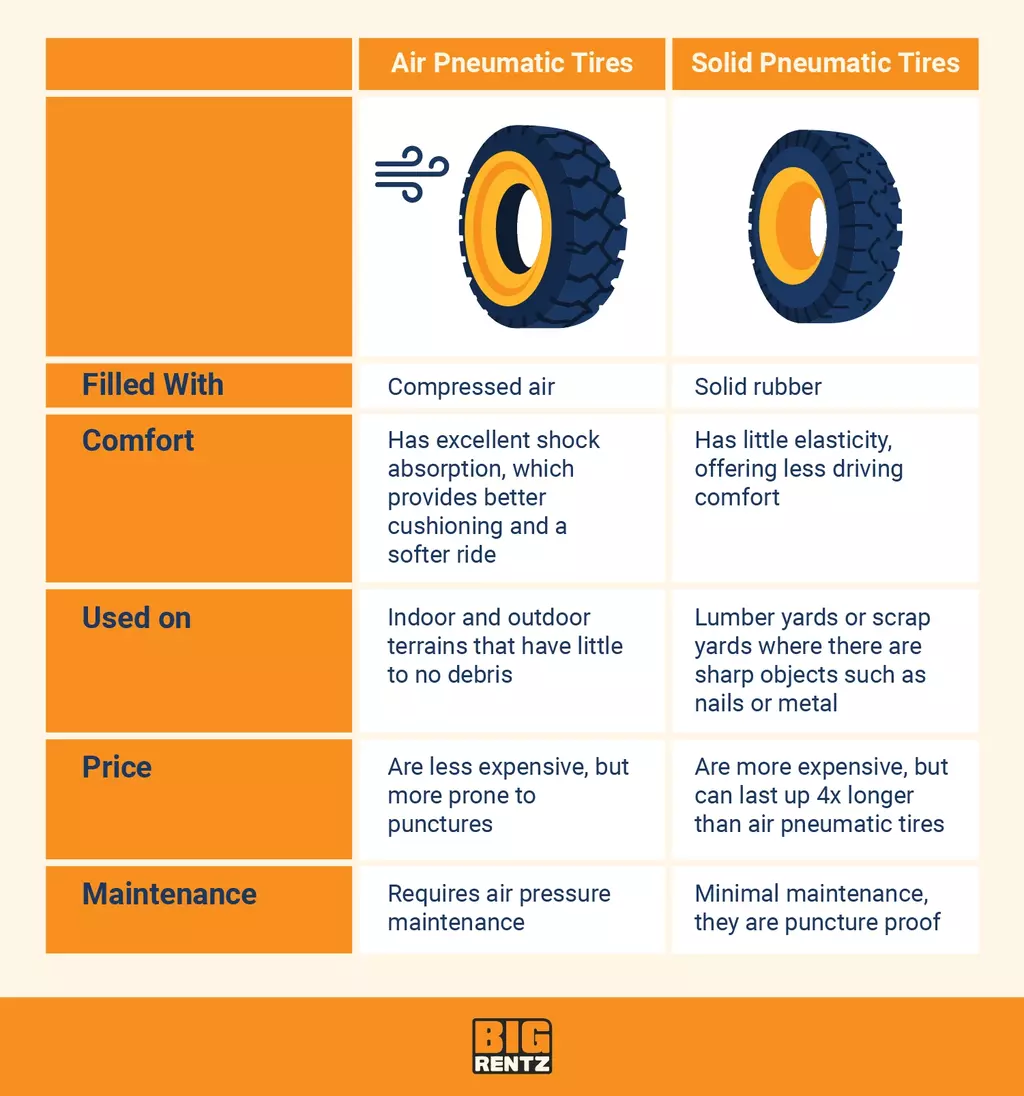
Pneumatic tires provide a smoother ride. They absorb shocks well due to their air-filled design. This reduces bumps felt on rough surfaces. Cushion tires have less shock absorption. They are solid and provide a firmer ride. This can feel harder on uneven ground.
Durability And Wear
Cushion tires are very durable. Made from solid rubber, they resist punctures and damage. They last longer in tough conditions. Pneumatic tires can wear faster. They are prone to flats and need more maintenance. However, they can be repaired easily if damaged.
Traction And Stability
Pneumatic tires offer better traction. Their flexible surface adapts to different terrains. This improves grip on soft or uneven ground. Cushion tires provide good stability on smooth floors. They perform well indoors or on flat surfaces but may slip on loose or wet areas.
Credit: www.bigrentz.com
Maintenance And Cost
Maintenance and cost are key factors when choosing between pneumatic and cushion tires. Both types have different needs and expenses. Understanding these differences helps you save money and time.
Upkeep Requirements
Pneumatic tires need regular air pressure checks. They can get flats from sharp objects. Cushion tires require less attention. They do not need air and resist punctures. Cleaning cushion tires is easier and faster. Pneumatic tires need more frequent inspections to avoid breakdowns.
Repair And Replacement Costs
Pneumatic tire repairs can be costly. Fixing a flat or replacing tubes adds up. Cushion tires have lower repair costs. They rarely puncture or need patching. Replacement for pneumatic tires happens more often. Cushion tires last longer, cutting replacement expenses.
Long-term Value
Pneumatic tires offer better shock absorption but cost more over time. Cushion tires save money on repairs and upkeep. They work well on smooth surfaces and indoor floors. Choose based on your work environment for best value.
Choosing Tires For Your Needs
Choosing the right tires is important for your equipment’s performance and safety. Tires affect how smoothly your machine moves and how well it handles different surfaces. Picking the right type helps you avoid damage and save money on repairs. This section explains how to choose between pneumatic and cushion tires based on your needs.
Indoor Vs Outdoor Use
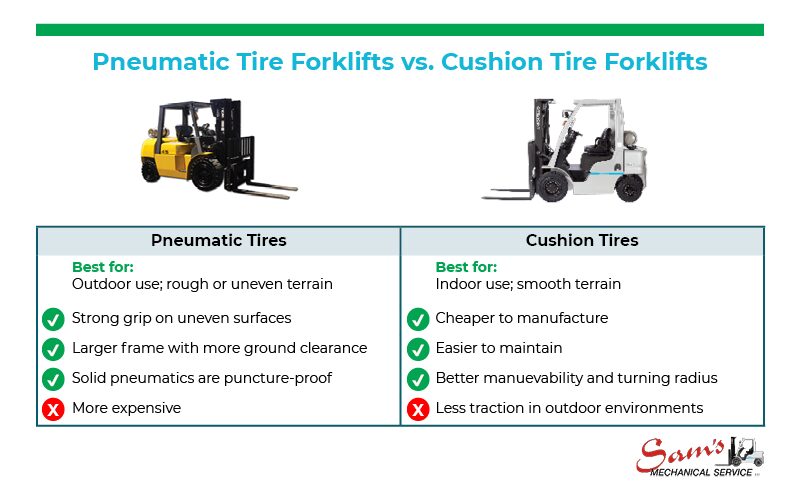
Pneumatic tires are filled with air. They absorb shocks well. This makes them great for outdoor use on rough or uneven ground. Cushion tires are solid and made from rubber. They work best indoors on smooth floors. Cushion tires resist damage from sharp objects inside warehouses. Choose pneumatic tires for outdoor jobs and cushion tires for indoor work.
Load Capacity Considerations
Load capacity means how much weight the tire can safely carry. Pneumatic tires offer good load support but can be damaged by heavy loads. Cushion tires handle heavy loads better because they are solid. For heavier equipment or loads, cushion tires last longer and stay stable. Always check the tire’s load rating to match your machine’s weight.
Terrain And Environment Factors
Terrain affects tire performance. Pneumatic tires work well on soft, uneven, or rough surfaces like gravel or dirt. They provide better traction and comfort. Cushion tires are best on smooth, hard surfaces like concrete or asphalt. They do not perform well on rough terrain. Consider the environment where your equipment will work to pick the right tire type.
Safety And Handling
Safety and handling play a big role in choosing between pneumatic and cushion tires. These tires affect how a vehicle moves and reacts on different surfaces. Understanding these differences helps improve control and reduce risks. Below are key points about safety and handling for both tire types.
Impact On Vehicle Control
Pneumatic tires offer better shock absorption. They soften bumps and rough surfaces. This leads to smoother rides and more control. Cushion tires have less give and feel harder. They work best on smooth floors but can be tricky on uneven ground. Vehicle control depends on tire type and surface.
Risk Of Flats And Punctures
Pneumatic tires are more likely to get flats. Sharp objects can pierce their air-filled chambers. This can stop a vehicle suddenly. Cushion tires are solid and resist punctures. This makes them safer in areas with debris. Choosing the right tire reduces downtime and accidents.
Emergency Situations
In emergencies, tire performance matters a lot. Pneumatic tires help with quick stops and smooth turns. Cushion tires may slip on wet or uneven surfaces. Drivers must know how their tires react. Proper tire choice improves safety during sudden maneuvers.
Frequently Asked Questions
What Are The Main Differences Between Pneumatic And Cushion Tires?
Pneumatic tires are air-filled, offering better shock absorption and traction. Cushion tires are solid rubber, ideal for smooth surfaces and heavy loads. Pneumatic tires suit outdoor use, while cushion tires excel indoors on flat floors.
Which Tire Type Is Better For Rough Terrain?
Pneumatic tires are better for rough terrain due to their air-filled design. They provide improved cushioning and grip on uneven surfaces. Cushion tires are less effective outdoors as they lack shock absorption and traction on rough ground.
Are Cushion Tires More Durable Than Pneumatic Tires?
Yes, cushion tires are generally more durable because they are solid rubber. They resist punctures and require less maintenance. Pneumatic tires can puncture and need regular air pressure checks, making them less durable in harsh environments.
How Do Pneumatic Tires Affect Forklift Performance?
Pneumatic tires enhance forklift performance by providing smooth rides and better traction outdoors. They absorb shocks, reducing operator fatigue and equipment wear. Pneumatic tires improve maneuverability on uneven surfaces compared to cushion tires.
Conclusion
Choosing between pneumatic and cushion tires depends on your needs. Pneumatic tires offer a smooth ride on rough surfaces. Cushion tires work well on smooth floors and hard surfaces. Consider where you will use your vehicle most often. Think about comfort, durability, and maintenance.
Each tire type has its own strengths. Match the tire to your work environment for best results. This way, you can get good performance and safety. Tires matter more than you might think. Choose wisely and keep your equipment running well.