Does Hyundai Warranty Cover Tires?
Buying a new car brings many questions. One of the most common is about the Hyundai warranty and what it really covers. Many owners wonder, “Does Hyundai warranty cover tires?” Tires are expensive and important for safety. Understanding your coverage can save you money and stress. This article explains exactly what the Hyundai warranty includes, how tire coverage works, and what to do if you have tire problems. You’ll also see comparisons, examples, and answers to common questions.
Hyundai Warranty Overview
Hyundai is known for offering strong warranties. The Hyundai warranty usually includes:
- 5-year/60,000-mile new vehicle limited warranty
- 10-year/100,000-mile powertrain warranty
- 7-year/unlimited mileage anti-perforation warranty
- 5-year/unlimited mileage roadside assistance
These warranties cover different parts of your car. The new vehicle limited warranty covers most components except for items that wear out naturally, like brake pads and tires. The powertrain warranty covers the engine and transmission. Roadside assistance helps if you need a tow or lockout service.
But What About Tires? Are They Part Of The Package?
Are Tires Covered By Hyundai Warranty?
The short answer: Hyundai’s factory warranty does NOT cover tires. This is true for both new and used Hyundai vehicles. Here’s why:
Tires are considered “wear-and-tear” items. They are expected to wear out over time, even with normal use. Hyundai’s basic warranty excludes items like tires, brake pads, and wiper blades, because they need regular replacement.
However, every new Hyundai comes with tires. So, what happens if you get a flat or see damage soon after buying?
Tire Manufacturer Warranty
Hyundai installs tires from brands like Michelin, Hankook, Kumho, or Goodyear. Each tire brand offers its own tire warranty. This warranty is separate from Hyundai’s, and covers defects in the tire itself. For example:
- Michelin: Usually offers a 6-year warranty against defects.
- Hankook: Offers a 5-year warranty for manufacturing issues.
- Goodyear: Provides coverage for defects and some road hazard situations.
If your tire has a manufacturing defect (like a bubble, split, or tread separation), the tire manufacturer—not Hyundai—will handle the claim. You can visit any authorized tire dealer to check if you qualify.
What’s Not Covered
Hyundai’s warranty—and tire manufacturer warranties—do NOT cover:
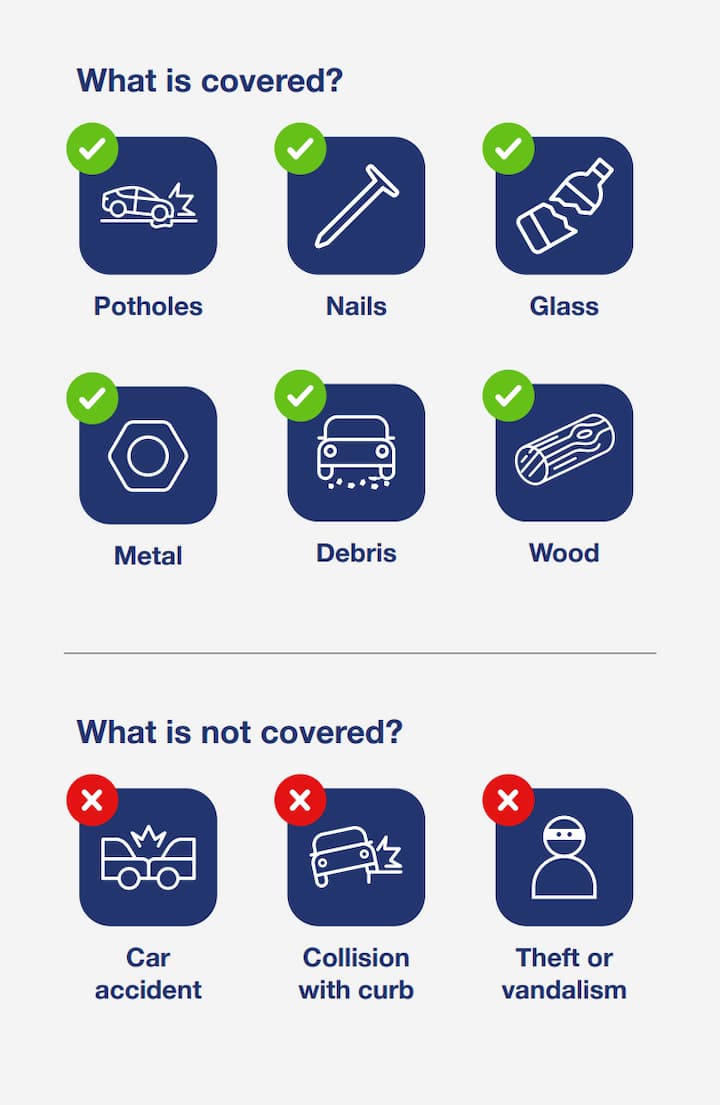
- Tire damage from road hazards (nails, glass, potholes)
- Normal wear and tread loss
- Damage from improper inflation or poor maintenance
- Accidents or vandalism
This means that if your tire wears out, gets a flat from a nail, or you hit a curb, you’ll need to pay for repair or replacement yourself.

Credit: www.jerryforthepeople.com
How To Make A Tire Warranty Claim
If you suspect your tire has a defect, follow these steps:
- Check your owner’s manual: It will have the tire brand and warranty details.
- Inspect the tire: Look for bubbles, cracks, or unusual wear.
- Contact the tire manufacturer: Find a local dealer or their customer service.
- Bring proof: Show your purchase date and mileage. Most claims require you to be the original owner.
- Get inspection: A tire dealer will inspect and decide if it’s a warranty issue.
Tip: Hyundai dealers can help, but claims go through the tire company. Sometimes the dealer will handle the process for you, but often they will direct you to a tire shop.
Hyundai Roadside Assistance And Tires
Although Hyundai’s main warranty doesn’t cover tires, its roadside assistance can help if you have a tire emergency:
- Flat tire change: Hyundai roadside assistance can change your flat tire if you have a spare.
- Towing: If you don’t have a spare, they can tow your car to a nearby repair shop.
This service lasts for 5 years with unlimited miles for new Hyundais. However, it does not pay for the tire itself—just the service.
Tire Maintenance And Warranty Tips
Many tire warranty claims fail because of poor maintenance. Here are some practical ways to protect your tires and your wallet:
- Check tire pressure monthly
- Rotate tires every 6,000–8,000 miles
- Inspect for cuts, cracks, or bulges regularly
- Avoid overloading your car
If you follow these steps, your tires will last longer and you’ll be more likely to qualify for warranty help if a defect appears.
Common Mistakes
- Assuming Hyundai covers tires: Many owners think the car warranty is “all-inclusive.” It’s not.
- Ignoring tire maintenance: Poor care can void the tire manufacturer warranty.
- Missing paperwork: Always keep your tire purchase and maintenance records. You’ll need them for claims.
Comparing Hyundai Warranty Vs Tire Manufacturer Warranty
To make things clearer, here’s a simple comparison between Hyundai’s warranty and typical tire manufacturer warranties:
| Coverage Aspect | Hyundai Warranty | Tire Manufacturer Warranty |
|---|---|---|
| Defects in tires | No | Yes |
| Normal wear | No | No |
| Road hazards (nails, potholes) | No | No (sometimes limited) |
| Flat tire roadside help | Yes (service only) | No |
| Coverage length | 5 years / 60,000 miles | Usually 5-6 years |

Credit: www.jerryvhonoluluhyundai.com
What About Certified Pre-owned Hyundais?
Hyundai’s Certified Pre-Owned (CPO) program offers extra warranty for used cars. But tire coverage rules are similar:
- The CPO warranty covers major components, but tires are excluded.
- Used Hyundais may have older tires. Tire warranties depend on the original tire manufacturer and the age of the tire.
If you buy a CPO Hyundai, ask the dealer about the tire age and any remaining tire manufacturer warranty.
Additional Tire Protection Options
Since tires are not covered by Hyundai, you may want extra protection. Here are some ways to do that:
- Buy a tire road hazard warranty: Many tire shops offer this at purchase. It covers flats, punctures, and some types of damage.
- Use credit card benefits: Some cards offer tire damage coverage if you buy tires with them.
- Consider extended warranties: Some third-party warranties include tire coverage, but read the fine print.
Comparison Of Tire Road Hazard Warranty Plans
Here’s how a typical tire shop road hazard warranty compares to tire manufacturer warranty:
| Feature | Tire Manufacturer Warranty | Road Hazard Warranty (Tire Shop) |
|---|---|---|
| Defects | Yes | No |
| Flat repair | No | Yes |
| Replacement for punctures | No | Yes (sometimes) |
| Coverage duration | 5-6 years | 1-3 years |
| Cost | Included | Extra fee |
Real Example: Hyundai Elantra Tire Warranty Case
Let’s look at a real situation. A Hyundai Elantra owner noticed a bubble on the sidewall just a few months after buying new tires. Here’s what happened:
- The owner went to the Hyundai dealer first.
- The dealer explained the issue was not covered by Hyundai’s factory warranty.
- The dealer checked the tire brand (Kumho) and gave the owner details for Kumho’s warranty.
- The owner visited a Kumho tire shop.
- The tire was inspected, and since the bubble was a manufacturing defect, Kumho replaced it for free.
This example shows why it’s important to know your tire brand and keep records.
Hyundai Warranty And Tire Costs
Many drivers want to know how much tire problems might cost if not covered by warranty. Here are some average prices:
- Tire repair: $15–$30 for a patch or plug
- New tire (Hyundai sedan): $90–$150 each
- New tire (Hyundai SUV): $120–$200 each
- Tire rotation: $20–$50 per visit
If you need to replace tires before 30,000 miles, check the tire manufacturer warranty. Otherwise, you’ll pay out-of-pocket.
Data: Tire Lifespan
Most tires last 40,000–60,000 miles with normal driving. However, poor roads, aggressive driving, or lack of maintenance can reduce this to 25,000 miles or less.
Key Insights Owners Often Miss
- You must claim tire defects quickly. Tire warranties often require you to act within a certain mileage or time.
- Tire manufacturer warranties require good maintenance records. If you can’t prove regular rotation and proper inflation, your claim may be denied.
- Roadside assistance is not the same as tire coverage. It helps you get moving, but doesn’t pay for new tires.
Hyundai Warranty: What’s Actually Included
For clarity, here’s a summary of what the Hyundai new vehicle warranty covers—and what it doesn’t:
| Component | Covered? |
|---|---|
| Engine | Yes |
| Transmission | Yes |
| Tires | No |
| Brakes (pads, rotors) | No |
| Paint | Yes (defects only) |
| Battery | Yes (limited period) |
| Windshield wipers | No |
| Rust (perforation) | Yes |
Credit: www.suburbanhyundai.com
Where To Find Tire Warranty Information
Your Hyundai owner’s manual has details about tire warranties. You’ll find:
- Tire brand and model
- Warranty booklet from the tire manufacturer
- Contact information for warranty claims
You can also check the tire brand’s website or ask your Hyundai dealer for help.
For more information on tire warranties and coverage, visit the National Highway Traffic Safety Administration (NHTSA).
Frequently Asked Questions
Does Hyundai Warranty Cover Tires If They Fail Early?
No. Hyundai’s warranty does not cover tires, even if they fail before expected. Only the tire manufacturer warranty covers defects—not normal wear or damage.
Can I Get My Tires Replaced For Free At A Hyundai Dealership?
Not usually. Hyundai dealers can help with tire manufacturer claims if there is a defect, but they do not replace tires for free under Hyundai’s factory warranty.
What Is Included In Hyundai’s Roadside Assistance For Tires?
Hyundai’s roadside assistance will help you with a flat tire by changing it with your spare or towing your car. They do not pay for repairs or new tires.
How Long Is The Tire Manufacturer Warranty?
Most tire brands on new Hyundais offer 5–6 years coverage for defects. This does not cover wear, road hazards, or owner-caused damage.
What Should I Do If My Tires Are Damaged And Not Covered By Warranty?
If your tires are damaged from road hazards or wear, you’ll need to pay for repairs or replacements. Consider road hazard coverage from a tire shop, or check if your credit card offers any benefits.
Final Thoughts
Understanding the Hyundai warranty and tire coverage helps you avoid surprises. Hyundai’s factory warranty does not cover tires—these are handled by the tire manufacturer. Keeping your tires well-maintained and knowing your options for extra coverage can save you money and headaches. If you have a tire problem, check your warranty booklet, maintain your records, and act quickly. Tires matter for safety, so knowing your coverage is key for every Hyundai owner.