When winter arrives and temperatures drop, many drivers notice a common problem: their car’s tires seem to lose air overnight. You may wake up to see your tire pressure warning light glowing, or find that your tires look a bit flat. This happens to millions every year, and it’s not just a sign of a damaged tire. The science behind it is simple but often misunderstood. Understanding why tires lose air in cold weather can save you from stress, wasted money, and even dangerous situations on the road.
The Science Behind Tire Pressure And Temperature
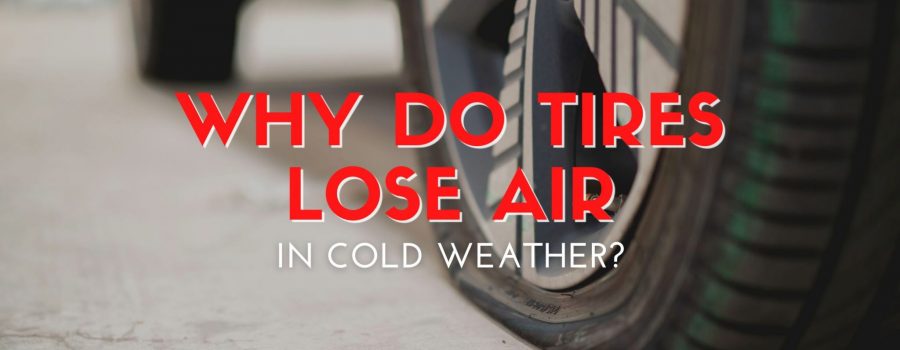
Tires are filled with air, usually compressed nitrogen or oxygen. These gases expand when heated and contract when cooled. This physical law is known as the Ideal Gas Law. When the temperature drops, the air molecules inside your tire slow down and take up less space. The result: less pressure inside the tire.
For every 10°F drop in temperature, tire pressure falls by about 1 PSI (pound per square inch). For example, if your tires were at 35 PSI at 70°F, but overnight the temperature falls to 30°F, your tire pressure could drop to about 31 PSI.
| Temperature (°F) | Tire Pressure (PSI) |
|---|---|
| 70 | 35 |
| 60 | 34 |
| 50 | 33 |
| 40 | 32 |
| 30 | 31 |
This change does not mean you have a puncture or a leak. It’s just the air inside shrinking as it gets colder.
Why Is Tire Pressure So Important?
Low tire pressure affects your vehicle’s safety, performance, and fuel efficiency. Underinflated tires can:
- Reduce traction, especially on icy or wet roads.
- Cause tires to wear out faster.
- Lower gas mileage by increasing rolling resistance.
- Make your car harder to handle and steer.
- Increase risk of tire blowouts.
A tire at 25 PSI instead of 35 PSI can shorten its lifespan by 20% and reduce fuel efficiency by up to 3%. That’s why it’s important to check your tire pressure regularly in winter.
Common Reasons Tires Lose Air In Cold Weather
Besides the physics of air contraction, there are other reasons why tires lose air when it’s cold. Here are the main causes:
1. Shrinking Air Volume
As mentioned, cold air takes up less space, dropping the pressure inside your tires.
2. Leaky Tire Valves
The valve stem is where you fill your tire with air. In winter, rubber parts can harden or crack, causing slow leaks. Dirt and salt from winter roads can also damage the valve.
3. Damaged Wheel Rims
Cold weather can cause rims to contract and expand, which may lead to microscopic cracks. These cracks can let air escape, especially if you hit a pothole.
4. Tire Bead Leaks
The bead is the edge of the tire that sits against the rim. If ice, snow, or road salt gets in, it can break the seal and cause slow leaks.
5. Old Or Worn Tires
Tires with thin tread or old rubber lose air faster. Cold weather can make rubber brittle, increasing the chance of leaks.
| Reason | Typical Cause | How It Gets Worse in Cold |
|---|---|---|
| Shrinking Air Volume | Lower temperatures | Air contracts more, pressure drops |
| Valve Leaks | Damaged valve stem | Rubber cracks, salt damages |
| Rim Damage | Hit potholes, corrosion | Metal contracts, cracks form |
| Bead Leaks | Seal breaks | Ice/snow breaks seal |
| Old Tires | Thin tread, aging | Rubber brittle, more leaks |
How To Prevent Tire Air Loss In Winter
Preventing air loss is easier than fixing a flat in freezing weather. Here’s how you can keep your tires healthy:
1. Check Tire Pressure Often
Always check tire pressure when tires are cold. Do it at least once a week in winter. Use a reliable digital gauge for accuracy.
2. Keep Tires Properly Inflated
Follow the recommended PSI in your owner’s manual or on the sticker inside your car’s door. Don’t rely on the number printed on the tire sidewall—it’s the maximum, not the recommended pressure.
3. Inspect Tire Valves
Look for cracks, dirt, or corrosion on the valve stem. Replace damaged stems and use valve caps to keep out moisture and salt.
4. Clean Tire Beads And Rims
If you notice slow leaks, ask your mechanic to clean the beads and rims. Removing dirt and salt can restore the seal.
5. Use Quality Winter Tires
Winter tires are made with softer rubber and better tread. They resist cracking and keep a better seal in cold weather.
6. Avoid Sudden Temperature Changes
Don’t park your car in a heated garage and then drive into freezing cold. Sudden changes can cause tire pressure swings and stress seals.
7. Get Tires Checked Annually
Before winter starts, have a mechanic inspect your tires, valves, and rims. This can catch issues before they cause trouble.
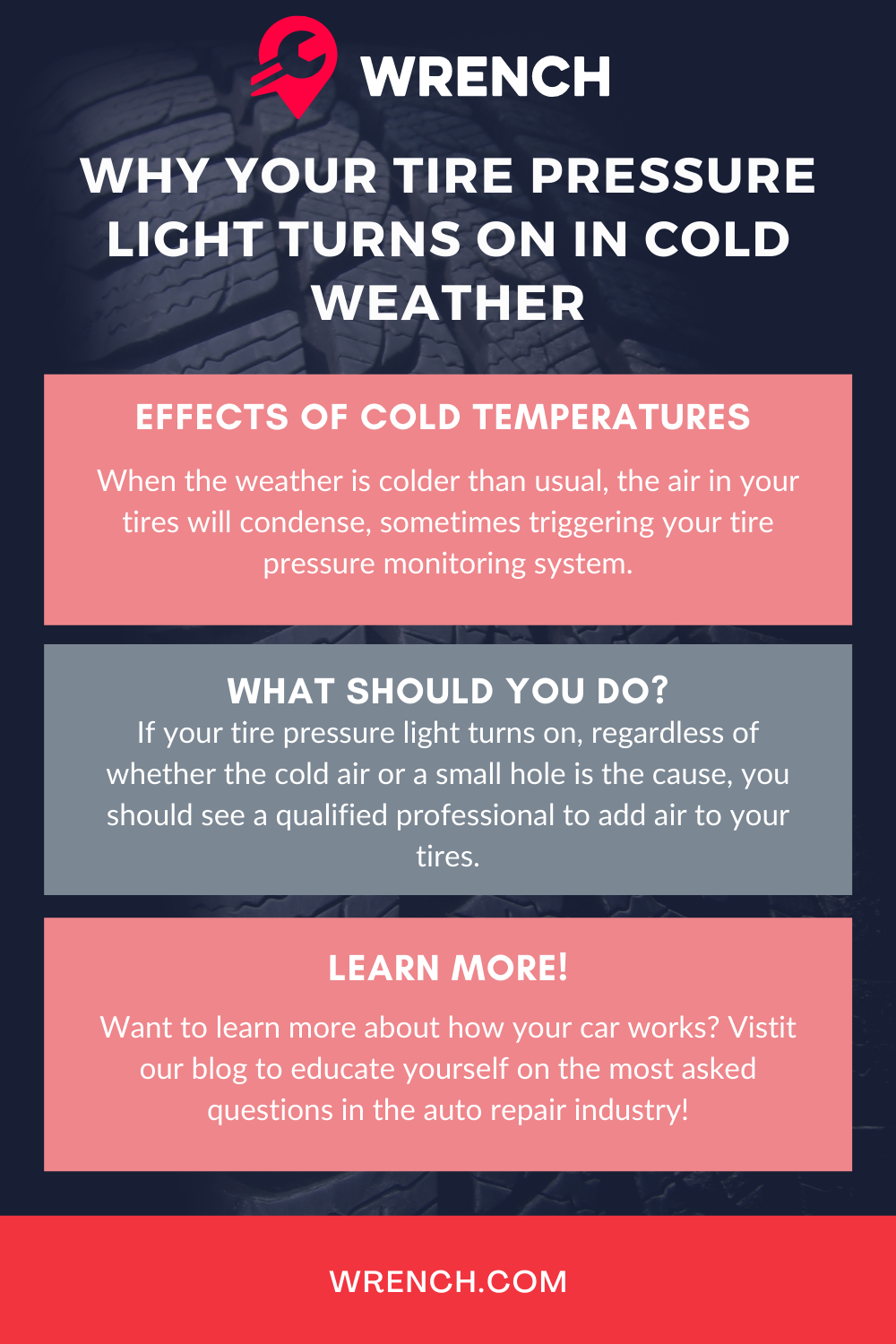
Credit: wrench.com
Two Insights Most Drivers Miss
Many people think a flat tire means a puncture, but in cold weather, it’s often just physics. If your tire pressure drops overnight, it’s usually not a hole—it’s the air inside shrinking. Second, many drivers believe topping up their tires once at the start of winter is enough. In reality, temperature swings throughout the season can change pressure, so regular checks are needed.
How Tire Pressure Monitors Help
Modern cars have TPMS (Tire Pressure Monitoring System) sensors that alert you when pressure drops. These systems work well, but they only warn you when pressure falls below a set level. They don’t tell you about slow leaks or gradual air loss.
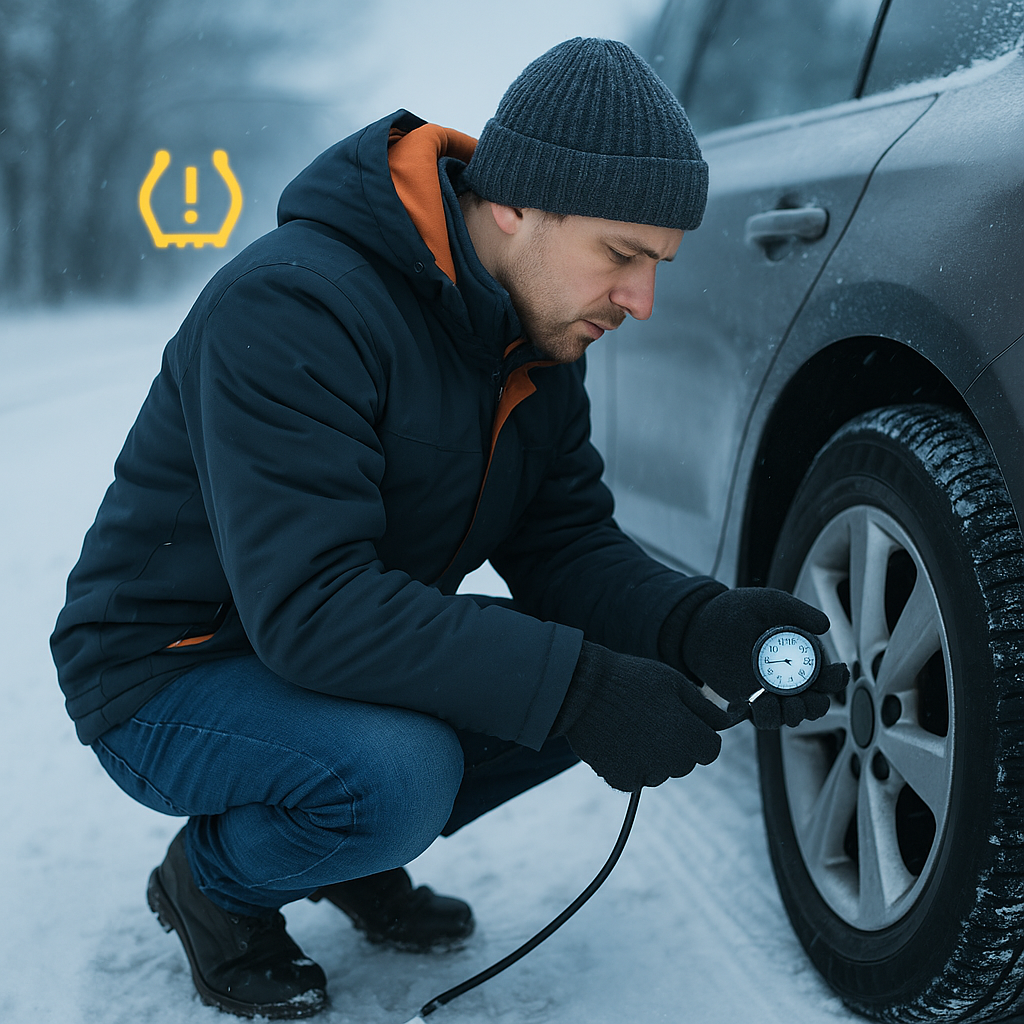
If your TPMS light comes on, check the pressure immediately. Don’t ignore it, even if you don’t notice any difference in handling. Driving with low pressure is dangerous.
Credit: postletire.com
Comparing Summer And Winter Tire Air Loss
Let’s look at how tire pressure changes between seasons:
| Season | Average Daytime Temp (°F) | Tire Pressure Change (PSI) | Main Cause |
|---|---|---|---|
| Summer | 80 | +2 to +4 | Air expands |
| Winter | 30 | -4 to -6 | Air contracts |
In summer, tire pressure often rises because air expands. In winter, it drops for the opposite reason. If you inflate your tires in summer and never check them again, you could be running dangerously low in winter.
What Happens If You Ignore Low Tire Pressure?
Ignoring low tire pressure can lead to:
- Poor traction: Harder to stop or steer.
- Uneven tire wear: Tires wear out faster.
- Lower fuel economy: More trips to the pump.
- Blowouts: Risk of sudden tire failure.
Many tire failures in winter are caused by drivers ignoring low pressure warnings. It’s not just about comfort—it’s about safety.
Practical Tips For Winter Tire Care
- Buy a quality tire gauge: Digital gauges are more accurate than old stick types.
- Check pressure in the morning: Before the car warms up, so you get a true reading.
- Top up air at gas stations: Most stations have free air pumps.
- Replace old tires: If tread is below 2/32 inch, it’s time for new tires.
- Keep a spare: And make sure it’s properly inflated, too.
If you notice your tires losing air quickly, get them checked by a professional. Sometimes a slow leak hides a bigger problem.
Real-world Example: Northern States
Drivers in places like Minnesota, Michigan, or New York see big temperature swings. In these states, winter can drop below 0°F. Tire pressure can fall by 5-8 PSI overnight. That’s enough to trigger TPMS warnings and make tires look visibly flat.
Local mechanics often see a rush of customers in the first cold snap, all needing air or repairs.
Credit: www.trafficsafetystore.com
When To Seek Professional Help
If your tires lose air even after you refill them, or if you see visible damage, don’t risk it. Visit a mechanic. They can check for:
- Punctures
- Bent rims
- Valve leaks
- Cracked tire beads
Even a small problem can become a big issue in winter.
Can Nitrogen Help?
Some shops offer nitrogen tire inflation. Nitrogen doesn’t expand or contract as much as oxygen, so pressure changes are smaller. However, it’s not a magic solution. You still need to check tire pressure regularly, and nitrogen can’t fix leaks or damage.
Expert Guidance: Stay Safe, Save Money
Keeping your tires at the right pressure in cold weather is one of the simplest ways to stay safe and save money. Don’t rely on visual checks alone—tires can look fine but be underinflated. Use a gauge, and check more often when temperatures swing.
If you want to learn more about tire physics and pressure, visit the Wikipedia Tire Pressure page for deeper science.
Frequently Asked Questions
Why Do Tires Lose Air Faster In Winter Than In Summer?
Cold air contracts, so tire pressure drops. In winter, temperature swings are bigger, causing more noticeable pressure changes.
Should I Inflate My Tires More In Winter?
Yes, keep tires at the recommended PSI. You may need to add air more often as cold weather makes pressure drop.
Is It Safe To Drive With Low Tire Pressure?
No. Low pressure reduces traction, increases wear, and can cause blowouts. Always inflate tires before driving.
How Often Should I Check Tire Pressure In Cold Weather?
Check at least once a week, and after big temperature drops. Always check when tires are cold for accurate readings.
Can I Use Nitrogen To Avoid Air Loss In Winter?
Nitrogen reduces pressure changes, but doesn’t prevent leaks. You still need to check tire pressure regularly.
When you understand why tires lose air in cold weather, you can stay safe, avoid costly repairs, and drive confidently all winter long. Checking your tire pressure is a small step that makes a big difference.