Resetting your Ford’s tire pressure sensor can feel tricky, especially if you don’t have much car experience. Many Ford owners get a sudden Tire Pressure Monitoring System (TPMS) warning light and wonder what to do next. Sometimes, the alert means your tires are low on air; other times, the sensor simply needs a reset. This guide will help you handle both situations confidently. You’ll learn what causes TPMS alerts, how to reset sensors on different Ford models, and mistakes to avoid. By the end, you’ll know exactly how to keep your tires safe and your dashboard clear.
What Is A Tire Pressure Sensor And Why Does It Matter?
Most modern Ford vehicles use TPMS sensors inside each tire. They check air pressure and send data to your car’s computer. If a tire drops below a safe level, the TPMS warning light turns on. This system helps you avoid flat tires, poor handling, and even accidents caused by low pressure.
Key facts:
- Since 2007, the US government requires all new cars to have TPMS.
- Ford uses both direct TPMS (sensor inside the tire) and indirect TPMS (uses ABS wheel speed sensors) on different models.
- Proper tire pressure improves gas mileage, extends tire life, and keeps you safer.
Common Reasons The Tpms Light Comes On
Before resetting the sensor, it helps to know why the warning appears. Here are the main causes:
- Low tire pressure: Cold weather, leaks, or punctures can lower air pressure.
- Sensor battery failure: Most sensors last 5–10 years; battery dies over time.
- Sensor damage: Changing tires or hitting a curb may harm the sensor.
- After tire rotation or replacement: Sensors might lose their sync.
- Electronic interference: Rare, but can happen near strong radio signals.
Non-obvious insight: Even a minor pressure drop (2–3 psi) can trigger the TPMS light. Many drivers ignore the alert, thinking it’s only for big leaks. In reality, small changes matter.
How To Check Tire Pressure Before Resetting
Always check actual tire pressure before resetting any sensor. If you reset without fixing a real problem, the warning will return.
Steps:
- Use a quality digital tire gauge for accuracy.
- Find recommended pressure on the sticker inside the driver’s door (usually 32–35 psi).
- Check all four tires, including the spare if your Ford has a sensor there.
- Inflate tires as needed.
Pro tip: Measure pressure when tires are cold. Driving heats them up and gives false readings.
Resetting Tire Pressure Sensor: Step-by-step For Most Ford Models
Ford’s TPMS reset process depends on your model and year. Let’s break down the most common methods.
For Ford F-150, Fusion, Focus, Escape, And Explorer (2010–2023)
These models usually have direct TPMS sensors. Follow these steps:
- Turn ignition ON (not engine): Insert key or press start button without starting the engine.
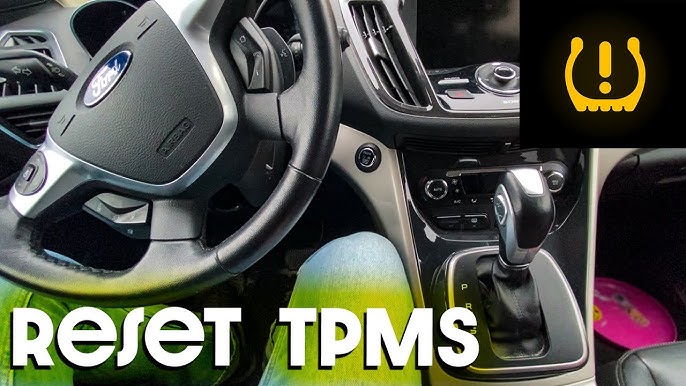
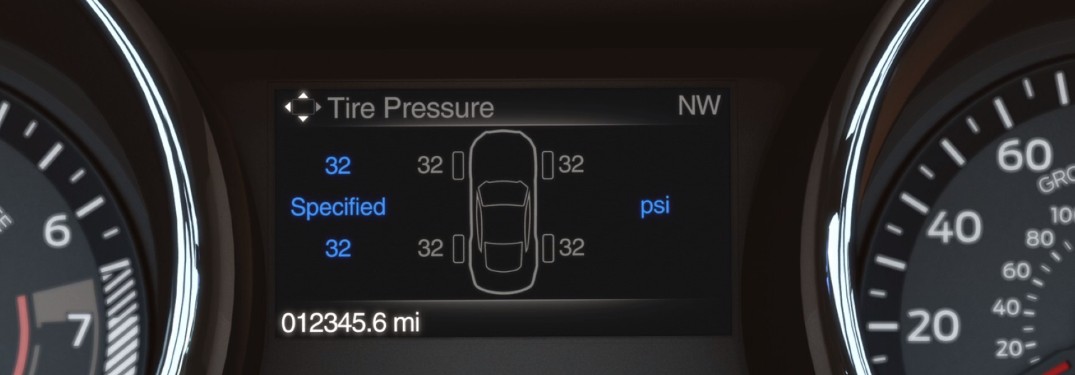
- Navigate to TPMS reset menu: Use steering wheel buttons to find “Settings” or “Vehicle” menu, then select “TPMS Reset.”
- Press and hold reset button: Some models have a physical reset button under the dashboard.
- Wait for confirmation: The TPMS light should blink and then turn off.
If your Ford doesn’t have a reset option, try this manual method:
- Inflate all tires to recommended psi.
- Drive at 15–30 mph for 10–20 minutes. The system will relearn pressure automatically.
Example: On a 2016 Ford Escape, after filling tires and driving, the TPMS light usually goes off within 15 minutes.
Using A Tpms Relearn Tool
Some Ford models require a special TPMS activation tool (costs about $25–$50). Here’s how to use it:
- Set tires to correct pressure.
- Turn ignition ON, then cycle OFF and ON three times to enter relearn mode.
- Start with the left front tire. Hold the tool against the tire sidewall near the valve stem, press the button.
- Wait for horn beep (means sensor is recognized).
- Repeat for each tire in order: Left front, right front, right rear, left rear.
- Finish by turning ignition OFF.
Data point: Most TPMS tools work on Ford vehicles made after 2008.
For Older Ford Models (pre-2007)
Older Fords may use indirect TPMS. Reset is simple:
- Inflate all tires.
- Drive for 10–15 miles; the system recalibrates itself.
Non-obvious insight: After replacing a sensor, you must use a TPMS tool or visit a dealer. The new sensor needs to be programmed to your car.
Comparing Ford Tpms Reset Methods
Here’s a quick comparison of the main reset options:
| Reset Method | Models Supported | Tools Needed | Time Required |
|---|---|---|---|
| Dashboard Menu | 2015+ F-150, Escape, Fusion | None | 2–5 minutes |
| TPMS Relearn Tool | 2008–2022 most models | TPMS tool | 5–10 minutes |
| Manual (Drive) | Older models | None | 10–20 minutes |
Common Mistakes When Resetting Ford Tpms
Many beginners make errors that cause the TPMS light to stay on or return quickly. Avoid these mistakes:
- Not inflating tires fully: Always fill tires before resetting.
- Wrong tire order: When using a TPMS tool, follow the correct tire sequence.
- Skipping the spare: Some Ford SUVs and trucks have a sensor in the spare tire.
- Ignoring sensor replacement: If a sensor is broken, resetting won’t fix it.
- Rushing the process: Wait for the horn beep or dashboard confirmation before moving to the next tire.
Pro tip: If you get repeated TPMS alerts after resetting, check for leaks or consider sensor replacement.
When To See A Mechanic For Tpms Issues
If your Ford’s TPMS light stays on after multiple resets, something deeper may be wrong. Here’s when to get professional help:
- Sensors don’t respond to the relearn tool.
- TPMS light flashes (not just stays solid).
- Tire pressure is fine, but alert won’t clear.
- You replaced a sensor and can’t program it.
Fact: Ford dealers can scan your TPMS system and diagnose issues quickly. They charge $50–$150 for sensor replacement and programming.
Cost Of Tpms Sensor Replacement And Reset
Let’s look at typical costs:
| Service | Average Price | Where Performed |
|---|---|---|
| Sensor Replacement | $40–$100 per sensor | Dealer or tire shop |
| TPMS Tool Purchase | $25–$50 | Online or auto parts store |
| Dealer Reset | $50–$150 | Dealer |
Non-obvious insight: Many tire shops reset TPMS for free if you buy new tires there.

Credit: www.akinsford.com
Practical Tips For Ford Owners
Keep your TPMS working smoothly with these tips:
- Check tire pressure monthly, not just when the TPMS light comes on.
- Store your TPMS tool in the glove box for emergencies.
- Record tire pressure in a notebook; this helps spot slow leaks.
- After tire rotation, always reset the sensors.
- If you drive in cold climates, expect the TPMS light to come on more often due to air contraction.
Data point: Properly inflated tires can improve fuel economy by up to 3%.
Ford Tpms Vs. Other Brands
How Does Ford’s Tpms Compare To Other Car Brands?
| Brand | TPMS Type | Ease of Reset | Sensor Cost |
|---|---|---|---|
| Ford | Direct & Indirect | Easy (menu or tool) | $40–$100 |
| Toyota | Direct | Easy (button or tool) | $50–$120 |
| Honda | Indirect | Very easy (just drive) | $45–$80 |
| Chevrolet | Direct | Moderate (tool required) | $60–$110 |
Pro tip: Ford’s TPMS is among the easiest for DIY resets if you have the right tool.
Credit: www.youtube.com
Useful Resources And Links
If you want to learn more or need official guidance, visit the Ford owner’s site or check out this NHTSA TPMS guide.
Frequently Asked Questions
What Does It Mean If My Ford Tpms Light Is Blinking?
A blinking TPMS light often means a sensor failure or communication error. It’s different from a steady light, which usually signals low pressure. If blinking, see a mechanic or check for damaged sensors.
Can I Drive With The Tpms Light On?
You can drive short distances, but it’s risky. Low tire pressure can cause poor handling and reduce fuel economy. Always check and inflate tires before resetting or driving far.
How Long Do Ford Tpms Sensors Last?
Most Ford TPMS sensors last 5–10 years. Battery failure is common after this period. Replacing sensors is necessary if batteries die, since they aren’t replaceable.
Do I Need A Special Tool To Reset Ford Tpms?
Some Ford models require a TPMS reset tool (especially 2008–2022 models). Others can reset through the dashboard menu. Check your owner’s manual for details.
Why Does My Ford Keep Showing Tpms Alerts After I Reset?
Persistent alerts may mean:
- Tire pressure drops again (slow leak or puncture)
- Faulty or damaged sensor
- Sensor not programmed correctly
If the problem repeats, get a sensor scan at a Ford dealer.
Resetting your Ford’s tire pressure sensor isn’t hard once you know the steps. Whether your model uses a dashboard menu, a TPMS tool, or manual driving, the key is to start with proper tire inflation and follow the right sequence.
Avoid common mistakes, and check sensors regularly. With these tips, you’ll drive safer and save money on tires.
Credit: www.akinsford.com