Driving with a spare tire is something most drivers face at least once. But when your regular tire fails and you need to use a full-size spare, you may wonder: How long can you drive on it? Is it safe for weeks, or just a few days? Understanding the limits and risks of using a full-size spare can help you make smart decisions and avoid unexpected trouble. This guide looks at how long you can use a full-size spare, what affects its lifespan, and practical tips for staying safe on the road.
What Is A Full-size Spare Tire?
A full-size spare tire is a tire that matches the size and type of the regular tires on your car. Unlike the smaller “donut” or compact spare, a full-size spare is meant to perform almost like your standard tire. Some vehicles come with a full-size spare from the factory, while others only have a compact version.
Full-size spares can be:
- Matching spare: Identical to your other tires, same brand, tread, and size.
- Non-matching spare: Same size but different brand or tread pattern.
Manufacturers often recommend full-size spares for larger vehicles like SUVs and trucks, where extra weight and performance matter.
How Long Can You Drive On A Full-size Spare?
Most experts agree you can drive much longer on a full-size spare than a compact spare. In ideal conditions, a full-size spare can be used as a regular tire until you repair or replace the damaged one. But there are important factors to consider:
- Quality and age of the spare
- Tread depth
- Matching or non-matching spare
- Driving conditions
If your full-size spare is brand new and matches your other tires, you can safely drive thousands of miles. In fact, you can sometimes keep it on for the rest of the tire’s life. If it’s older, unused, or doesn’t match, experts advise using it temporarily—usually for up to a few months or around 2,000–5,000 miles.
Manufacturer Recommendations
Car makers often provide guidelines in your owner’s manual. For example:
- Toyota: “A full-size spare can be used as a regular tire, but check its age and condition.”
- Ford: “Use a full-size spare until the original tire is repaired, but match tread depth for best performance.”
Always check your manual for the most accurate advice for your vehicle.
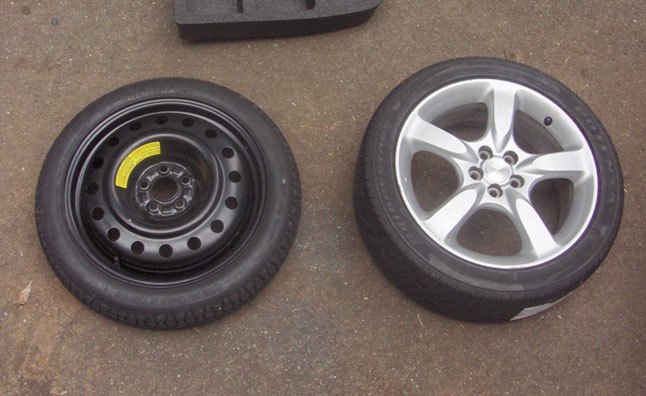
Credit: www.autoguide.com
Factors That Affect How Long You Can Use A Full-size Spare
1. Condition And Age
A spare tire that’s been sitting in your trunk for years can age and lose quality, even if it looks new. Rubber breaks down over time, which can cause:
- Cracks
- Loss of flexibility
- Weak sidewalls
If your spare is more than 6 years old, even unused, it’s safer to use it only for short periods.
2. Tread Depth
Tread depth is crucial for safety. If your spare’s tread is less than 2/32 inch (the legal minimum in most states), it’s not safe to use for long. You can check tread depth with a penny: Insert the penny into the tread with Lincoln’s head upside down. If you can see all of Lincoln’s head, the tire needs replacement.
3. Matching Vs Non-matching
If your spare is the same brand, size, and tread pattern as your other tires, you can drive much longer. A non-matching spare may cause:
- Poor handling
- Uneven wear
- Reduced braking performance
If you use a non-matching spare, limit usage to a few weeks or until you can get a proper replacement.
4. Vehicle Type
Heavier vehicles like SUVs and trucks put more stress on tires. Using an unmatched or old spare can cause faster wear and safety risks.
5. Weather And Road Conditions
Driving in rain, snow, or extreme heat can shorten the life of a spare tire. If you drive on rough roads or potholes, the risk increases.
Comparing Full-size Spare Vs Compact Spare
To understand why a full-size spare lasts longer, look at the differences:
| Feature | Full-Size Spare | Compact Spare |
|---|---|---|
| Size | Same as regular tire | Smaller than regular tire |
| Driving Distance | Thousands of miles | 50–70 miles |
| Speed Limit | No special limit (follow regular tire speed) | 50 mph maximum |
| Handling | Similar to regular tire | Reduced stability and grip |
| Replacement Needed | Not urgent if matching | Urgent—replace ASAP |
Risks Of Driving Too Long On A Spare Tire
Even if your spare is full-size, there are risks to using it for extended periods:
- Uneven tire wear: If your spare doesn’t match the others, your tires may wear unevenly, which affects handling and safety.
- Reduced traction: Older or mismatched spares may have less grip, especially on wet or icy roads.
- Mechanical stress: Using a non-matching spare can strain your car’s suspension or drivetrain, especially on all-wheel-drive vehicles.
- Unexpected failure: Spares stored for years may fail suddenly due to hidden damage.
How To Check If Your Spare Is Safe
Before using a full-size spare, check these points:
- Tire age: Look for the DOT code on the sidewall. The last four digits show the week and year the tire was made. For example, 1017 means the 10th week of 2017. If the tire is over 6 years old, use it only as a short-term solution.
- Tread depth: Use a tread gauge or the penny test.
- Sidewall condition: Look for cracks, bulges, or dry spots.
- Air pressure: Inflate to the recommended PSI (check your door sticker or manual).
- Matching: Check if the spare matches your other tires in size and tread.
Practical Tips For Using A Full-size Spare
- Rotate your spare: If your vehicle has a matching full-size spare, include it in your regular tire rotation. This keeps wear even and ensures the spare stays in good condition.
- Replace old spares: Even if unused, change your spare every 6–10 years.
- Drive normally, but check often: If your spare matches, you can drive as usual. If not, drive carefully and check for unusual noises or handling problems.
- Get your damaged tire fixed soon: Even with a full-size spare, aim to repair or replace your original tire within a few weeks.
Real-world Examples
Many drivers have used full-size spares for months with no problems. For example, a 2017 Toyota Camry owner replaced a damaged tire with a matching full-size spare and drove over 5,000 miles before getting a new tire. However, another driver with a non-matching spare on a Ford F-150 noticed reduced traction and replaced it after two weeks.
A 2021 AAA study found that 85% of drivers with full-size spares used them for more than a week, but only 40% checked the spare’s age and condition before installing it. This shows the importance of inspecting your spare before relying on it.
How Long Should You Keep Driving?
If your spare is:
- Matching and new: You can drive until the end of its tread life—often 20,000–40,000 miles.
- Non-matching or older: Limit usage to 2,000–5,000 miles or a few weeks.
- Worn or aged: Use only to get to a repair shop.
Here’s a quick summary:
| Spare Type | Recommended Maximum Distance | Recommended Maximum Time |
|---|---|---|
| Matching & New | Up to 40,000 miles | Months or until worn out |
| Non-Matching | 2,000–5,000 miles | Weeks to a few months |
| Older Spare (>6 years) | 500–2,000 miles | Days to a few weeks |
| Compact Spare | 50–70 miles | 1–2 days |
Common Mistakes When Using A Full-size Spare
Many drivers make mistakes that can cause problems:
- Ignoring tire age: Old spares can fail even if unused.
- Not checking air pressure: Under-inflated tires are dangerous.
- Assuming “full-size” means unlimited use: Not all full-size spares are created equal.
- Using a non-matching spare long-term: This can affect safety and performance.
- Failing to rotate the spare: This can cause uneven wear.

Credit: neotires.com
When Should You Replace Your Spare Tire?
Replace your spare if:
- It’s older than 6–10 years
- The tread is below 2/32 inch
- The sidewall is damaged
- It doesn’t match your current tires
Don’t wait for your spare to fail—plan ahead and keep your tires fresh.
Expert Advice And Data
Tire experts from the Tire Industry Association recommend replacing spares every 6–10 years, even if unused. The National Highway Traffic Safety Administration (NHTSA) warns that old tires, including spares, can pose serious risks.
A survey by the Rubber Manufacturers Association found that 33% of spares are over 6 years old, and 21% have low air pressure, making them unsafe for regular driving.
For more in-depth tire safety information, visit NHTSA.

Credit: www.spitzerfordhartville.com
Frequently Asked Questions
How Do I Know If My Full-size Spare Is Safe To Use?
Check the age, tread depth, sidewall condition, and air pressure. If your spare is under 6 years old, has good tread, and matches your other tires, it should be safe for regular driving.
Can I Use A Full-size Spare For Long Highway Trips?
Yes, if it’s matching, new, and has proper tread. For non-matching or older spares, limit highway driving and replace your regular tire soon.
Is It Bad To Drive With A Non-matching Full-size Spare?
It’s not ideal. Non-matching spares can cause uneven wear, handling issues, and stress on your car’s mechanical parts. Use them only as a temporary fix.
How Often Should I Check My Spare Tire?
Check your spare every 3–6 months for air pressure, age, and condition. Inspect before long trips or after changing tires.
What’s The Difference Between A Full-size Spare And A Compact Spare?
A full-size spare is the same size as your regular tires and can be used longer. A compact spare is smaller, meant only for short distances (50–70 miles), and has speed limits.
Choosing the right spare and knowing its limits can help you drive with confidence. If you ever need to use a full-size spare, follow these tips and check your tire often. A little attention now can save you from big trouble later.