Changing a trailer tire on the roadside can feel stressful, especially if you’re new to towing or maintenance. Whether you’re hauling a boat, camper, or utility trailer, knowing how to change a trailer tire is a basic skill that saves time, money, and sometimes even your trip.
A flat tire doesn’t have to ruin your plans if you’re prepared with the right tools, steps, and knowledge. This guide will walk you through the process in clear, simple steps—plus offer tips even experienced drivers sometimes overlook.
Why Trailer Tires Fail
Tire blowouts are a common problem for trailer owners. Most happen because of underinflation, overloading, or old tires. Unlike car tires, trailer tires often sit unused for long periods, causing rubber to age and crack. Regularly checking tire pressure and condition is key. According to the National Highway Traffic Safety Administration, tire-related crashes cause about 11,000 accidents yearly in the US. Many are preventable with good maintenance and quick, safe tire changes.
Tools And Supplies You Need
Before you hit the road, make sure your trailer has these items:
- Spare tire (properly inflated and in good condition)
- Lug wrench (fits your trailer’s lug nuts)
- Jack (rated for your trailer’s weight)
- Wheel chocks
- Gloves
- Flashlight (if you might change a tire at night)
- Tire pressure gauge
- Breaker bar (optional, for stuck lug nuts)
- Torque wrench (for proper tightening)
- Reflective triangles or flares (for roadside safety)
Non-obvious tip: Many trailer spare tires are smaller or a different type than the main tires. Check compatibility before you need it.
Safety First: Preparing To Change The Tire
Safety is the first priority. If your trailer gets a flat on the road:
- Slow down gradually. Don’t brake hard or swerve.
- Find a safe spot. Pull as far off the road as possible, ideally on level ground.
- Turn on hazard lights.
- Set up warning triangles or flares at least 100 feet behind your trailer.
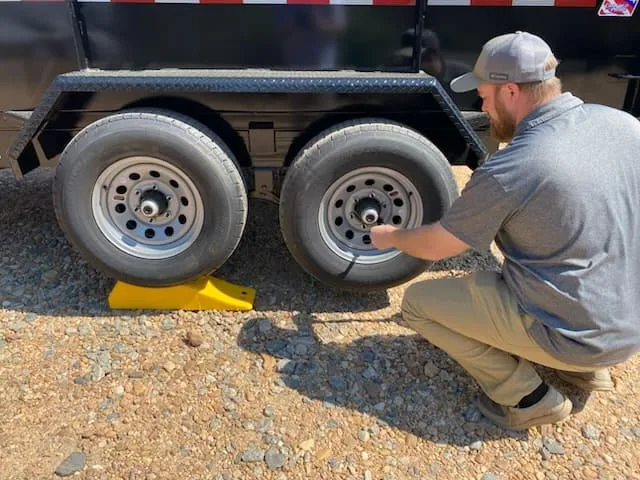
- Chock the wheels on the opposite side to prevent rolling.
Non-obvious tip: If the trailer is attached to your tow vehicle, keep it connected while changing the tire. This adds stability.
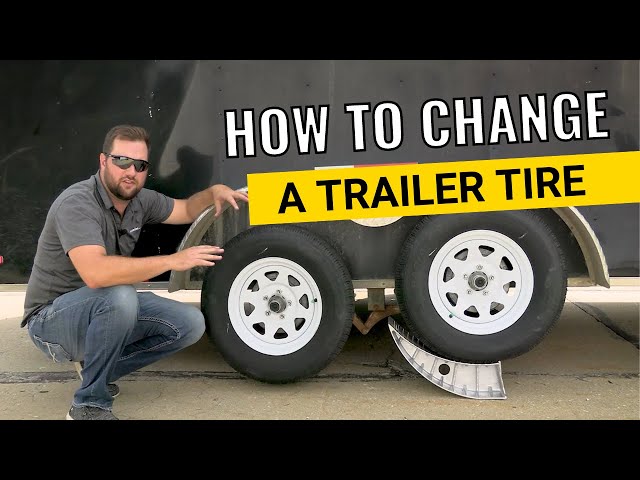
Step-by-step: How To Change A Trailer Tire
1. Loosen The Lug Nuts
Before lifting the trailer, use the lug wrench to loosen the lug nuts on the flat tire. Turn them counterclockwise. Don’t remove them completely yet. Loosening on the ground keeps the wheel from spinning.
2. Position The Jack
Check your trailer’s manual for the correct jack point. Usually, it’s the frame near the flat tire. Never place the jack under plastic or thin metal parts. Slide the jack under the frame, making sure it’s stable and straight.
3. Lift The Trailer
Pump or turn the jack to raise the flat tire off the ground. The tire should clear the ground by at least an inch. Double-check that the trailer is secure before proceeding.
4. Remove The Lug Nuts And Tire
Now remove the loosened lug nuts completely. Set them aside in a safe place (they’re easy to lose in grass or gravel). Pull the flat tire straight off and lay it flat under the trailer as a backup safety measure.
5. Mount The Spare Tire
Lift the spare tire onto the hub, lining up the holes. Push it flush against the hub. Hand-tighten the lug nuts onto the bolts in a star pattern (tighten one, then the opposite).
6. Lower The Trailer
Slowly lower the trailer back to the ground using the jack. Remove the jack when the tire sits firmly on the ground.
7. Tighten The Lug Nuts
With the trailer on the ground, use the lug wrench (or torque wrench if available) to tighten the nuts fully, again in a star pattern. This ensures the wheel seats evenly and stays secure. For most trailer wheels, torque specs range from 90–120 ft-lbs—check your manual for exact numbers.
8. Check Tire Pressure
Use a tire pressure gauge to make sure the spare is properly inflated. Trailer tires often need higher PSI than car tires—commonly 50–65 PSI.
9. Stow Everything And Double-check
Put your tools, the flat tire, and safety equipment away. Walk around the trailer and look for loose items or hazards before driving.

Credit: kempoutside.com
Comparison: Trailer Tire Vs. Car Tire Change
It’s easy to assume changing a trailer tire is the same as a car tire, but there are key differences:
| Aspect | Trailer Tire | Car Tire |
|---|---|---|
| Jack Placement | Frame near the wheel, avoid axles | Usually under car’s pinch weld or frame |
| Stability | Keep trailer attached to vehicle for safety | Car can be jacked up alone |
| Tire Pressure | Often 50–65 PSI | Usually 30–35 PSI |
| Wheel Nut Torque | 90–120 ft-lbs (check manual) | Varies, often 80–100 ft-lbs |
Spare Tire Types: What’s On Your Trailer?
Not all trailer spares are the same. Here’s a quick overview of common types:
| Spare Type | Description | When to Use |
|---|---|---|
| Full-Size Spare | Same size and type as regular tire | Best for all journeys, no speed or distance limits |
| Temporary/“Donut” Spare | Smaller, lighter, limited use | Short distances only; drive under 50 mph |
| Bias Ply Spare | Older style, stiffer sidewalls | For short trips or older trailers |
| Radial Spare | Modern, flexible, longer-lasting | Preferred for long trips and highway use |
Credit: www.youtube.com
Common Mistakes To Avoid
Changing a trailer tire seems simple, but small mistakes can cause big problems. Watch out for these:
- Using a jack on the axle instead of the frame (can bend the axle)
- Failing to chock wheels—trailer can roll off the jack
- Not tightening lug nuts enough—wheels can come loose on the road
- Mixing tire types (radial and bias ply) on the same axle
- Ignoring tire age—even if tread looks good, rubber over 5–7 years old can fail
How To Check If Your Spare Tire Is Still Good
Many trailer owners forget about the spare until they need it. To check if your spare tire is safe:
- Look for cracks, dry rot, or bulges in the sidewall
- Check the date code (last four digits show week/year made)
- Press the valve stem to ensure no air leaks
- Inflate to the recommended PSI every 3–6 months
Even if never used, tires older than 7 years should be replaced.
Emergency Tire Repair: Temporary Fixes
Sometimes you might not have a spare, or the flat is a slow leak. You can try:
- Tire sealant spray (for small punctures, not for sidewall damage)
- Plug kit (only for tread area, not for large holes)
- Portable air compressor (to re-inflate slowly leaking tires)
These fixes are only to get you to a service shop—not for long trips or high speeds.
When To Call For Professional Help
It’s okay to admit when a tire change is too risky. Call for roadside assistance if:
- The trailer is on a steep hill or soft ground
- Lug nuts are rusted and won’t budge
- You don’t have the right tools or spare
- The trailer is very heavy (multi-axle or loaded car hauler)
Services like AAA or local towing companies can help quickly. For more details on tire safety and maintenance, check the National Highway Traffic Safety Administration.
Credit: www.kenfeagintruckandtrailer.com
Extra Tips For Long-distance Towing
If you plan long trips with your trailer:
- Carry two spares if possible (especially for double-axle trailers)
- Keep a headlamp in your tool kit for night repairs
- Practice changing a tire at home before your trip
- Mark your tools with bright tape so they’re easy to find in grass or gravel
Frequently Asked Questions
What Size Jack Do I Need For My Trailer?
Your jack must be rated for at least the gross weight of your trailer. For most utility trailers, a 2-ton (4,000 lbs) jack is enough. Always check your trailer’s weight sticker.
Can I Use A Car Tire As A Spare For My Trailer?
No, trailer tires are built differently for load and stability. They have stronger sidewalls. Using car tires can cause sway and unsafe handling.
How Often Should I Check My Trailer Tires?
Check tire pressure and condition before every trip, and at least once a month if parked. Don’t forget the spare!
Why Do Trailer Tires Need Higher Air Pressure?
Trailer tires carry more weight and have stiffer sidewalls. Lower pressure can cause heat buildup and blowouts. Always follow the PSI on the tire’s sidewall.
What Is The Best Way To Store My Trailer Spare?
Keep it covered and out of sunlight. UV rays and weather can damage rubber over time. If possible, mount it off the ground.
Changing a trailer tire is a skill every trailer owner should master. With the right tools, a bit of practice, and these tips, you’ll be ready for almost any roadside emergency. Take the time to check your tires, know your equipment, and drive safely—so a flat tire never ruins your adventure.