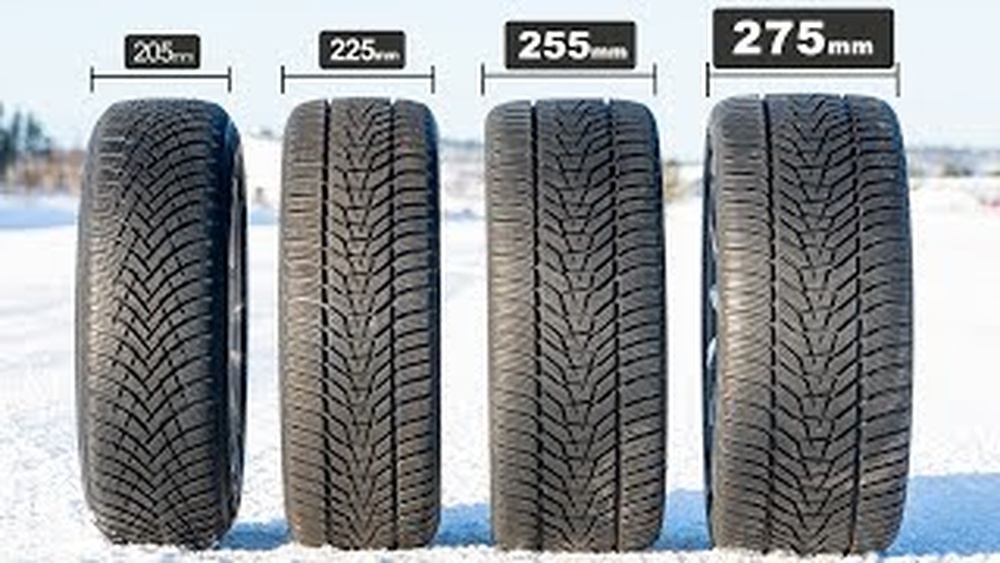
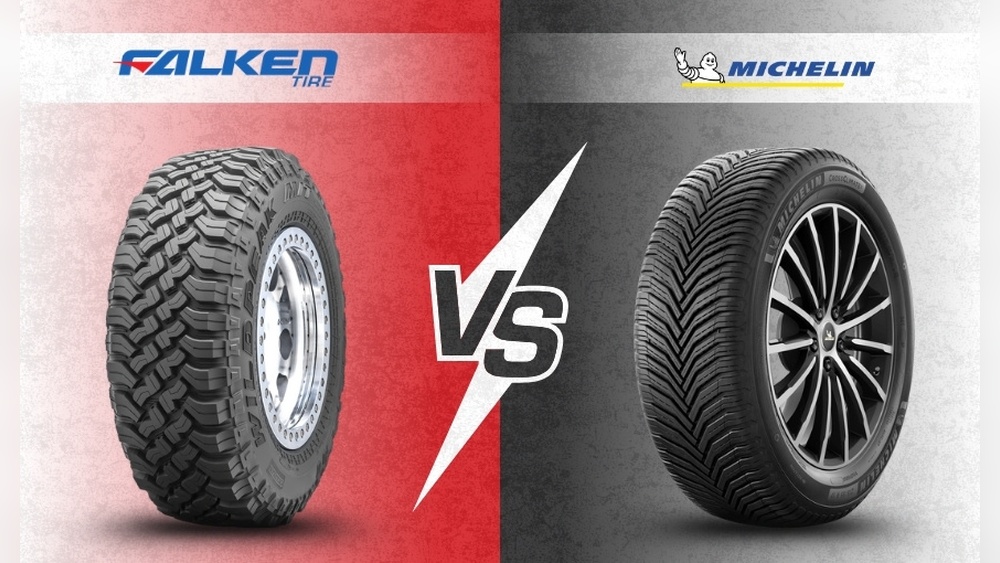
Are you confused about which tires to choose for your vehicle? When it comes to tackling tough conditions, snow tires and off-road tires both promise better performance—but they serve very different purposes.
Choosing the wrong set could leave you stuck, unsafe, or wasting money. You’ll discover the key differences between snow tires and off-road tires so you can make the best choice for your driving needs. Keep reading to find out which tires will give you the control and confidence you want on every adventure.
Snow Tires Design
Snow tires have a special design that helps cars drive safely on icy and snowy roads. Their design is different from off-road tires. Every part of a snow tire works to give better grip and control. This keeps drivers safe in cold, slippery conditions.
Snow tires focus on handling cold weather and snow-covered roads. They use unique patterns, materials, and technology. These features improve traction and reduce slipping risks. Below, we explore how snow tires are built to perform well in winter.
Tread Patterns
Snow tires have deep, wide grooves in their tread. These grooves help move snow and water away from the tire. They prevent the tire from slipping on wet surfaces. Many tiny cuts, called sipes, are in the tread. Sipes create extra edges to grip ice and packed snow. This design improves braking and turning on icy roads.
Rubber Compounds
The rubber in snow tires stays soft and flexible in cold weather. This is different from off-road tires that use harder rubber. Soft rubber grips the road better at low temperatures. It helps the tire bend around bumps and ice. Hard rubber can become stiff and lose grip in winter. Snow tires use special compounds that keep the rubber effective in freezing conditions.
Temperature Adaptability
Snow tires perform best in cold temperatures below 45°F (7°C). They are not made for warm weather. In cold, their rubber stays soft and treads stay effective. Off-road tires do not adapt well to cold. Their rubber hardens and loses traction. Snow tires help cars drive safely on winter roads by adjusting to cold weather conditions.

Credit: www.tirebuyer.com
Off Road Tires Features
Off road tires have special features for tough driving conditions. They help vehicles move safely on dirt, rocks, and mud. These tires give better grip and protect the vehicle from damage. The design focuses on strength and long-lasting use.
Each feature plays a key role in making off road tires reliable. Understanding these features helps you see why they differ from snow tires.
Aggressive Tread Blocks
Off road tires have large and deep tread blocks. These blocks dig into soft surfaces for strong grip. They clear mud and dirt quickly. This stops slipping and keeps control on rough paths.
The wide gaps between treads improve traction on loose ground. This design also helps the tire clean itself while driving.
Sidewall Strength
Off road tires have thick and tough sidewalls. This protects the tire from cuts and punctures. Sharp rocks and sticks can damage weaker tires easily.
Strong sidewalls also support heavy loads and rough impacts. They help keep the tire stable on uneven surfaces.
Durability On Rough Terrain
These tires use special rubber compounds for long life. They resist tears, chips, and wear from rough roads. This makes them last longer in harsh conditions.
Durable construction reduces the chance of tire failure. It gives drivers confidence on challenging trails.
Performance On Snow
Snow performance is a key factor when choosing between snow tires and off-road tires. Each tire type handles snow differently. Understanding their strengths helps you pick the right tire for winter conditions.
Traction On Ice
Snow tires have special rubber compounds that stay soft in cold weather. This helps them grip icy roads better. Their tread patterns are designed to bite into ice and hard snow. Off-road tires have bigger tread blocks but less grip on ice. They work well on rough terrain but slip more on ice.
Handling On Packed Snow
Snow tires offer better control on packed snow. Their sipes, small slits in the tread, improve grip and stability. This design helps drivers steer smoothly and avoid sliding. Off-road tires can struggle on packed snow. Their aggressive tread can cause less contact with the road, reducing control.
Braking Distance
Snow tires shorten braking distance on snowy roads. Their tread and rubber help the vehicle stop faster and safer. Off-road tires usually have longer braking distances on snow. Their design focuses on mud and rocks, not snow, which affects stopping power.

Credit: www.discountedwheelwarehouse.com
Performance Off Road
Off-road performance tests the true strength of tires. Snow tires and off-road tires react differently on rough surfaces. Understanding their behavior helps choose the right tire for your adventure.
Mud And Dirt Grip
Off-road tires have deep, wide treads that dig into mud and dirt. They push away the soft ground to keep traction. Snow tires have smaller treads designed for slippery ice, not thick mud. Off-road tires hold better in sticky, uneven terrain.
Rock Climbing Ability
Off-road tires use strong sidewalls and tough rubber to handle sharp rocks. Their tread blocks are spaced to grip rocky surfaces firmly. Snow tires lack this toughness and slip on hard rocks. Off-road tires protect wheels and keep control on rough climbs.
Water And Sand Traction
Off-road tires channel water through large grooves to avoid slipping. Their design stops sand from packing into the tread, keeping grip strong. Snow tires may struggle in wet or sandy areas. Off-road tires maintain steady traction on wet ground and loose sand.
Wear And Longevity
Wear and longevity are key factors when choosing tires. Both snow tires and off-road tires face tough conditions. Their ability to last long saves money and effort. Understanding how each type wears out helps make a smart choice. The tire’s material and design influence its durability. Proper care also affects how long tires stay safe and strong.
Tread Life
Snow tires have softer rubber to grip icy roads. This softness causes faster tread wear on dry pavement. Off-road tires use harder rubber to resist rough surfaces. Their tread lasts longer on rocks and dirt. Choosing tires for your main driving surface extends tread life. Snow tires wear quickly in warm weather. Off-road tires handle rough terrain but may feel noisy on highways.
Resistance To Damage
Snow tires focus on traction, not heavy damage. They can crack if used on hot roads for long. Off-road tires have thicker sidewalls and stronger tread. They resist cuts, punctures, and impacts better. Rocks and sticks are less likely to harm off-road tires. Snow tires may get damaged if driven off-road. Pick tires that match your usual driving conditions to avoid damage.
Maintenance Tips
Check tire pressure regularly to avoid uneven wear. Rotate tires every 5,000 to 8,000 miles for even tread use. Clean tires after driving through mud or salt to prevent damage. Store snow tires in a cool, dry place during summer. Inspect off-road tires for cuts or embedded stones often. Proper maintenance helps tires last longer and perform better.
Fuel Efficiency Impact
Fuel efficiency is important for every driver. Tires affect how much fuel your vehicle uses. Choosing the right tires can save money at the pump. Snow tires and off road tires have different impacts on fuel use. Understanding this helps you pick the best option for your needs.
Snow Tires And Fuel Efficiency
Snow tires have a softer rubber and deeper tread. This design improves grip on ice and snow. But softer rubber creates more friction on dry roads. More friction means your engine works harder and uses more fuel. Snow tires usually lower fuel efficiency by about 3-5% compared to regular tires. The extra grip is helpful in winter but costs more fuel.
Off Road Tires And Fuel Efficiency
Off road tires have large, chunky tread patterns. These treads help on mud, rocks, and rough paths. The big tread blocks create more air resistance. They also make the tire heavier than normal tires. This extra weight makes the engine use more fuel. Off road tires can reduce fuel efficiency by 10% or more. They are best for tough terrain, not for daily driving.
Choosing Tires For Better Fuel Economy
Pick tires based on your driving conditions. Use snow tires only in winter months. Switch back to regular tires in warmer seasons. Use off road tires only if you drive on rough paths often. For city or highway driving, choose tires designed for fuel efficiency. Proper tire inflation also helps save fuel. Check tire pressure regularly for best performance.
Cost Comparison
Cost is a key factor when choosing between snow tires and off-road tires. Each type has different price points and value over time. Knowing these differences helps you decide which fits your budget and needs.
Initial Purchase Price
Snow tires usually cost less than off-road tires. They are made for cold weather and icy roads, which is simpler to design. Off-road tires need tough materials and special tread for rough terrain. This makes them more expensive upfront.
Long Term Value
Snow tires wear out faster if used off season or on rough surfaces. They may need replacement every few years. Off-road tires last longer on tough trails and rough roads. They offer better durability, which can save money in the long run.
Choosing Tires For Your Needs
Choosing the right tires is important for safety and performance. Tires affect how your vehicle handles different roads and weather. Snow tires and off-road tires serve different purposes. Understanding your needs helps pick the best tire type.
Consider where and how you drive most. The right tires keep you safe and improve your driving experience.
Climate Considerations
Climate plays a big role in tire choice. Snow tires work best on icy and snowy roads. They have special rubber and tread for cold weather. Off-road tires suit dry, rough, and muddy conditions. They handle dirt and rocks well but may not be good on ice.
Driving Style
Your driving style affects tire needs. Drive mostly on highways or city streets? Snow tires offer better grip in winter. Drive on trails or rough paths? Off-road tires provide extra toughness and traction. Think about speed and road type too.
Vehicle Compatibility
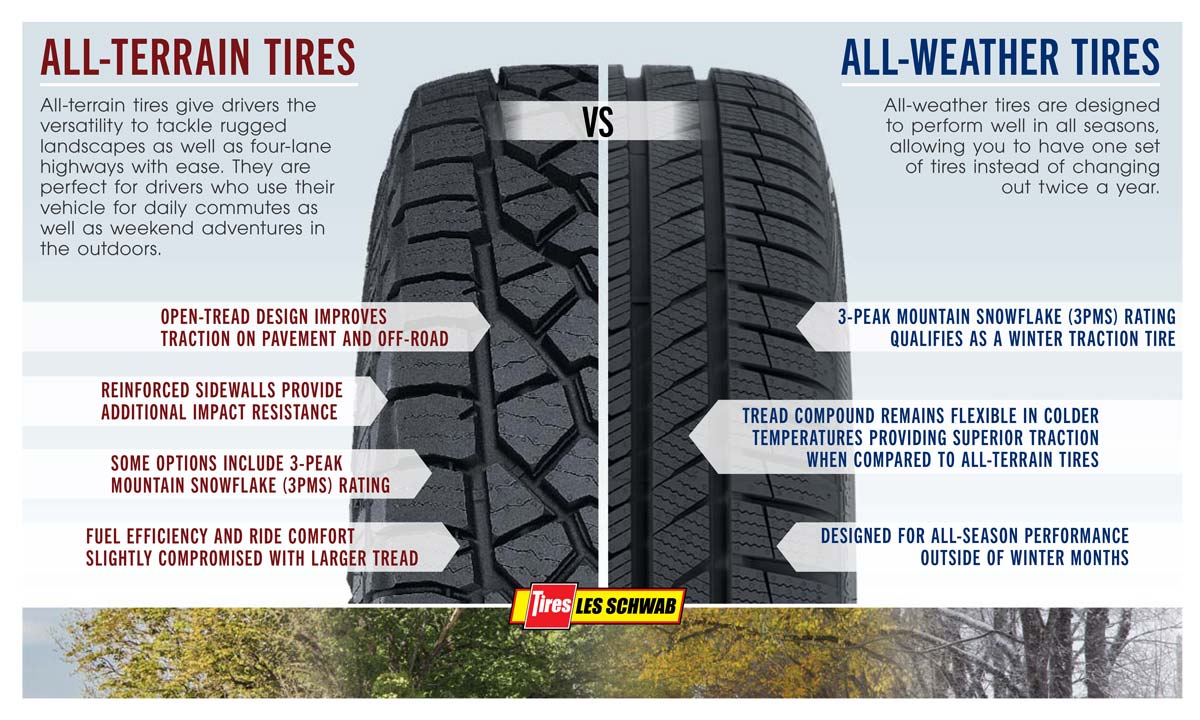
Not all tires fit every vehicle. Check your vehicle’s manual for tire size and type. Snow tires fit most cars and SUVs. Off-road tires often fit trucks and larger vehicles better. Proper fit helps with safety and tire life.
Credit: www.lesschwab.com
Frequently Asked Questions
What Are The Main Differences Between Snow Tires And Off-road Tires?
Snow tires have special rubber and tread for ice and snow traction. Off-road tires feature deeper, more aggressive treads for mud and rough terrain. Each tire type is optimized for different driving conditions and surfaces, offering better safety and performance.
Can Snow Tires Be Used For Off-road Driving?
Snow tires are not ideal for off-road use. They lack the aggressive tread needed for mud and rocks. Off-road tires provide better grip and durability on rough surfaces, making them safer and more effective in off-road environments.
Are Off-road Tires Suitable For Winter Driving?
Off-road tires perform poorly on ice and snow compared to snow tires. Their rubber compounds harden in cold, reducing traction. Snow tires are designed to stay flexible and grip slick surfaces, ensuring safer winter driving.
How Do Snow Tires Improve Winter Driving Safety?
Snow tires enhance safety by providing better traction on icy roads. Their treads channel snow and slush away from the tire. This reduces slipping and improves braking, helping drivers maintain control in winter conditions.
Conclusion
Choosing between snow tires and off-road tires depends on your driving needs. Snow tires work best on icy and snowy roads. Off-road tires handle rough, uneven terrain well. Each tire type improves safety and performance in different conditions. Think about where you drive most often before buying.
Proper tires help you stay safe and control your vehicle. Always match your tires to the weather and road type. This way, your drives become smoother and less risky.