When you look at your car’s tires, you’ll see a mix of letters and numbers printed on the sidewall. One common code is 95H. This marking is important for drivers, but many people don’t really know what it means. Understanding tire codes can help you make safer choices, save money, and prevent problems on the road. Let’s break down what 95H means, why it matters, and how to use this information when buying or maintaining your tires.
What Does 95h Mean?
The 95H marking is a combination of two elements: the load index (95) and the speed rating (H). Both numbers and letters are standardized, so they have a clear meaning across all tire brands.
The Load Index: 95
The load index tells you how much weight a tire can support when properly inflated. The number 95 is not the actual weight in pounds or kilograms, but a code that refers to a specific value.
According to industry standards, a load index of 95 means the tire can carry 1,521 pounds (690 kg).
Here’s a comparison of common load indexes:
| Load Index | Max Load (lbs) | Max Load (kg) |
|---|---|---|
| 91 | 1,356 | 615 |
| 94 | 1,477 | 670 |
| 95 | 1,521 | 690 |
| 98 | 1,653 | 750 |
If your car has four tires with a load index of 95, the total load capacity is 1,521 lbs x 4 = 6,084 lbs. This does not mean you can load your car to that total weight, because you need to include the vehicle weight, passengers, cargo, and other factors. Always check your car’s owner manual for the correct tire load index.
The Speed Rating: H
The letter H is the speed rating, which tells you the maximum speed the tire can safely handle. Again, this is a code, not the actual speed.
For H, the maximum safe speed is 130 mph (210 km/h).
Here are some common speed ratings:
| Speed Rating | Max Speed (mph) | Max Speed (km/h) |
|---|---|---|
| T | 118 | 190 |
| H | 130 | 210 |
| V | 149 | 240 |
| W | 168 | 270 |
Most drivers never reach these speeds, but the rating is still important. Tires with higher speed ratings tend to have better handling, more grip, and higher performance.
Why Load Index And Speed Rating Matter
Many people ignore these codes when buying tires, but they affect safety, performance, and even insurance.
- Safety: If you use tires with a lower load index than recommended, the tires can fail under heavy loads. This can cause accidents.
- Performance: Using a tire with a lower speed rating can reduce handling, especially during fast driving or emergency maneuvers.
- Legal and Insurance Issues: Some countries require certain speed ratings by law. If you use the wrong tire, your insurance may not cover you in case of an accident.
- Longevity: Tires that are not matched to your car’s needs can wear out faster or unevenly.

Credit: vatire.com
How To Find The Right Tire For Your Car
Tire shopping can be confusing, but knowing about 95H helps you choose wisely.
- Check your vehicle’s manual: Always start with your car’s manual. It tells you the minimum load index and speed rating you need.
- Look at your current tires: Check the sidewall for the code. Make sure replacements match or exceed the original specs.
- Consider your driving habits: If you drive fast on highways, you may need a higher speed rating. If you carry heavy loads, focus on load index.
- Ask the tire shop: Good shops can check the codes and recommend the right tire.
Example
Suppose you drive a family sedan. Your manual says to use tires with a load index of at least 94 and a speed rating of H. If you buy a tire marked 95H, you are safe: it meets or exceeds both requirements.
Common Mistakes When Choosing Tires
Many beginners make mistakes that can lead to problems. Here are a few:
- Ignoring the load index: Some people buy cheaper tires with a lower load index. These tires can fail if overloaded.
- Choosing lower speed rating for price: Sometimes, drivers pick tires with a lower speed rating to save money. This can affect handling and safety.
- Mismatched tires: Mixing tires with different load indexes or speed ratings can cause uneven wear and unpredictable handling.
- Not checking for updates: Car manufacturers sometimes change recommendations after recalls or safety updates. Always check the latest advice.
How 95h Compares To Other Tire Markings
You may see other codes like 91T, 98V, or 94W. Each combination affects performance and safety.
Comparison Table: 95h Vs Common Tire Codes
| Tire Marking | Load Index | Speed Rating | Max Load (lbs) | Max Speed (mph) |
|---|---|---|---|---|
| 91T | 91 | T | 1,356 | 118 |
| 94W | 94 | W | 1,477 | 168 |
| 95H | 95 | H | 1,521 | 130 |
| 98V | 98 | V | 1,653 | 149 |
In most cases, you should not downgrade. For example, if your original tire is 95H, do not switch to 91T unless your car’s manual says you can.
Non-obvious Insights About Tire Codes
Most drivers know the basics, but here are two insights that many beginners miss:
- Load index is for single tires, not total weight: People often think the load index is the total weight for all tires combined. In reality, it’s per tire. If you overload just one tire (for example, by uneven cargo), it can fail even if the others are safe.
- Speed rating affects tire construction: Tires with higher speed ratings are built with better materials and have stronger internal structures. This means they often handle heat and stress better, even at lower speeds. So, a higher speed rating can mean better durability.
Credit: www.firestonecompleteautocare.com
How Tire Codes Affect Driving Experience
Your choice of 95H tires can change how your car feels and responds.
- Handling: Tires with higher speed ratings like H, V, or W often have stiffer sidewalls, which improve cornering and steering response.
- Comfort: Sometimes, higher-rated tires can feel less comfortable because they are firmer. If you want a softer ride, you may prefer a lower speed rating, but never go below what your car needs.
- Noise: Some tires with higher speed ratings are quieter due to improved tread designs.
- Fuel Efficiency: Heavier, higher-rated tires can slightly reduce gas mileage, but the difference is usually small.
When Should You Upgrade Or Downgrade Tire Ratings?
It’s tempting to buy tires with a higher load index or speed rating, but is it always wise?
- Upgrade: If you frequently carry heavy loads or drive at high speeds, upgrading is smart. For example, switching from 95H to 98V gives you more capacity and speed.
- Downgrade: Avoid downgrading. It is only safe if your vehicle’s manual allows it, and your driving habits support it. Otherwise, it can be risky.
Checking Tire Codes: Practical Tips
Here’s how to check the 95H code on your tires:
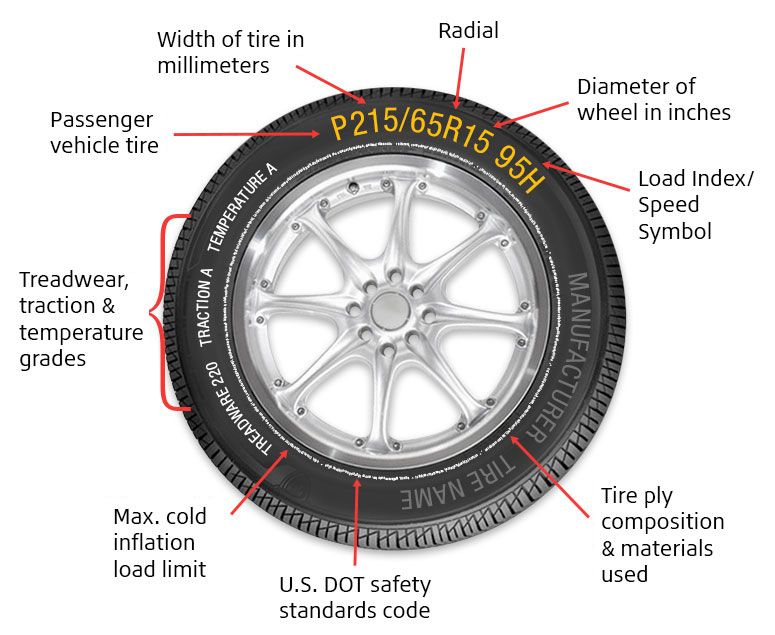
- Look at the tire sidewall. Find the section with numbers and letters (like 225/45R17 95H).
- The last group is the load index and speed rating. In this example, 95H.
- If you see something different, check your manual and consider replacing the tire.
If you are unsure, ask a professional. Tire shops usually have guides and can confirm the right codes for your car.
Real-world Example: 95h In Everyday Driving
Let’s say you drive a Toyota Camry. The recommended tire size is often 215/60R16 95H. This means:
- 215 = tire width in mm
- 60 = aspect ratio (height)
- R16 = rim size in inches
- 95H = load index and speed rating
With 95H, your tires can handle normal family use, highway speeds, and moderate loads. If you switch to lower-rated tires, you risk handling issues and even insurance problems.
Where To Learn More
If you want to dive deeper into tire codes, tire construction, and safety, official resources like the Wikipedia Tire Code page offer more details. For practical advice, talk to a trusted mechanic or tire shop.
Frequently Asked Questions
What Does 95h Mean On Tires?
95H combines the load index (95) and speed rating (H). The load index means each tire can carry up to 1,521 pounds, and the speed rating H means the tire can safely handle speeds up to 130 mph.
Can I Use A Tire With A Lower Load Index Than 95?
No, you should not use a tire with a lower load index unless your car’s manual allows it. Lower load index tires can fail if overloaded, leading to dangerous situations.
Is A Higher Speed Rating Always Better?
Not always. Higher speed ratings mean better performance and durability but can cost more and sometimes feel less comfortable. Always match or exceed your car’s recommended speed rating.
What Happens If I Mix Tires With Different Load Indexes Or Speed Ratings?
Mixing tires can cause uneven wear, unpredictable handling, and safety issues. It’s best to have all four tires with the same load index and speed rating.
How Do I Know What Load Index And Speed Rating My Car Needs?
Check your vehicle’s manual or the sticker inside the driver’s door. It lists the recommended tire specs, including load index and speed rating.
Choosing the right tire is more than just size. 95H gives you both strength and speed for safe, reliable driving. When you understand these codes, you can make smarter choices and enjoy better performance on the road.

Credit: www.infinitichattanooga.com