Every winter, drivers face the same question: Should you overinflate your tires during the cold months? Tire pressure changes with temperature, and there’s a lot of advice—some helpful, some not so much—circulating in car forums and conversations. If you want to keep your car safe and performing well, it’s important to understand what really happens to your tires in winter, how cold affects tire pressure, and whether overinflating is a smart move or a risky habit.
Why Tire Pressure Drops In Winter
As the temperature drops, the air inside your tires contracts. This is basic physics: cold air molecules move slower and take up less space. As a result, your tire pressure can decrease by about 1 PSI for every 10°F drop in temperature. For example, if your recommended tire pressure is 35 PSI and it was set on a 70°F day, it can drop to around 32 PSI when the weather falls to 40°F.
Modern cars often have a tire pressure monitoring system (TPMS) that alerts you when pressure is too low. Still, many drivers are surprised to see the warning light in winter, even if they haven’t had a puncture.
Dangers Of Driving With Underinflated Tires
Underinflated tires are not just a small inconvenience—they can make winter driving much more dangerous. Here’s why:
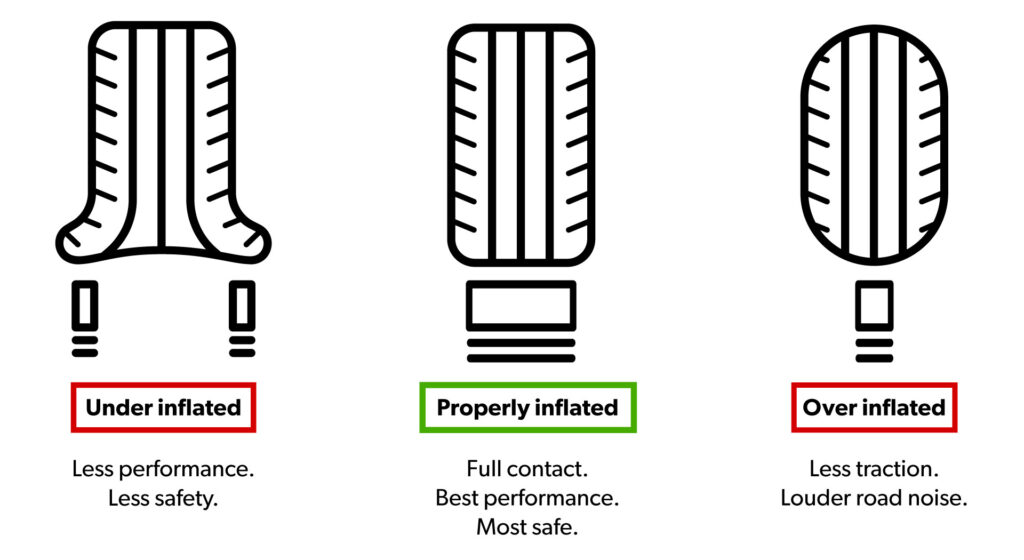
- Poor traction: Less air means the tire’s contact patch with the road is larger, but not in a good way. The tire flexes more, which can reduce grip, especially on snow and ice.
- Slower steering response: Soft tires don’t react as quickly, making your car feel sluggish or unstable in emergencies.
- Increased wear: Underinflation causes the tire edges to wear faster, shortening tire life.
- Higher fuel consumption: More rolling resistance means your engine works harder, using more gas.
According to the National Highway Traffic Safety Administration (NHTSA), driving on underinflated tires increases the risk of a crash by up to 25%.
Credit: www.telletire.com
The Case For Overinflating Tires In Winter
Some drivers believe that slightly overinflating their tires before winter will help compensate for the pressure drop when temperatures fall. The logic: set your pressure a bit higher when it’s warm, so when the air gets cold, your tires won’t become dangerously low.
This idea has some merit, but there are important details to consider:
- Manufacturers recommend “cold” tire pressure—meaning, check and fill your tires when they haven’t been driven for several hours and are at the outside temperature.
- Overinflating by just a few PSI above the recommended value isn’t usually dangerous, but going much higher can create problems.
Let’s see what happens when you overinflate.
Risks Of Overinflated Tires
While it might feel safer to have “too much” air in winter, overinflation brings its own set of problems:
- Reduced traction: The tire’s contact patch shrinks, which means less grip—exactly what you don’t want on icy roads.
- Harsher ride: Overinflated tires feel stiffer and can make your car bounce over bumps, reducing comfort and control.
- Uneven wear: Excess pressure causes the center of the tread to wear out faster, wasting money and reducing tire life.
A study by Bridgestone found that tires overinflated by as little as 5 PSI can lose up to 15% of their contact patch area.
Here’s a simple comparison to visualize tire behavior:
| Tire Pressure | Contact Patch Size | Ride Comfort | Traction |
|---|---|---|---|
| Underinflated | Large (but uneven) | Soft | Poor (especially on ice) |
| Correct | Optimal | Balanced | Best |
| Overinflated | Small | Harsh | Poor (less grip) |
What The Experts Recommend
Car and tire manufacturers almost always advise following the recommended tire pressure listed on the sticker inside your driver’s door or in the owner’s manual. This number is chosen for your specific car, balancing safety, comfort, fuel efficiency, and tire life.
Most experts agree:
- Check your tire pressure at least once a month and before long trips, especially during winter.
- Adjust pressure when tires are “cold” (haven’t been driven for at least three hours).
- Do not overinflate as a regular habit. If you live where temperatures swing dramatically, it’s okay to fill your tires to the top end of the recommended range.
How To Check And Adjust Tire Pressure In Winter
- Use a quality pressure gauge: Digital or dial-type gauges are more accurate than the stick type found at gas stations.
- Check when tires are cold: Early morning, before the car is driven, is ideal.
- Compare to the recommended pressure: Find this number on the sticker inside your driver’s door or in your owner’s manual.
- Add air if needed: Fill tires in small bursts, checking pressure between each one.
- Don’t rely only on TPMS: Some systems only alert when pressure is very low.
It’s also a good idea to check your spare tire, which people often forget.
Special Situations: When Overinflating Might Make Sense
There are a few rare cases where slight overinflation could be considered:
- Long drives in extreme cold: If you’re starting a road trip at -10°F, filling tires 1–2 PSI above the recommended value can help offset the drop during the drive. But never exceed the maximum pressure listed on your tire’s sidewall.
- Carrying heavy loads: More weight can compress your tires; check your manual for different pressures if your car is fully loaded.
However, these are exceptions—not everyday advice.
Real-world Example: Tire Pressure Changes In A Cold Snap
Imagine you set your car’s tires to 35 PSI at 60°F. Overnight, the temperature drops to 10°F. Using the rule of 1 PSI per 10°F, your pressure could fall to around 30 PSI. Now your TPMS might light up, and your tires are underinflated.
If you had filled them to 37 PSI when it was warmer, they’d be closer to 32 PSI after the drop—still within the safe range. But if you had overinflated to 40 PSI, you’d face the risks of poor grip and a harsh ride.
Credit: auto.howstuffworks.com
Comparing Winter Vs. Summer Tire Pressure
It helps to see how tire pressure recommendations may change throughout the year:
| Season | Recommended PSI | Why Adjust? |
|---|---|---|
| Summer | Follow manual/sticker | Heat increases pressure; check often during heat waves |
| Winter | Follow manual/sticker (may fill to upper range) | Cold reduces pressure; check more frequently |
Two Insights Most Drivers Miss
First, many people set tire pressure based on what “looks right” or how the tire feels. This is unreliable, especially in winter when the difference is hard to see. Always use a gauge.
Second, tire pressure can change just from driving. As tires heat up, pressure increases. So, if you check after a long drive, you might get a falsely high reading.

Credit: www.youtube.com
Common Mistakes To Avoid
- Ignoring the TPMS light in winter: Don’t assume it’s just the cold. Check your tires right away.
- Overfilling to “play it safe”: More is not always better.
- Using the maximum pressure on the tire sidewall: This is not the recommended running pressure—it’s the safe limit.
- Not adjusting for big temperature swings: If your area sees 40°F changes in a week, check more often.
How Tire Pressure Affects Braking And Handling In Winter
Properly inflated tires are critical for safe stopping and cornering on winter roads. Overinflated tires can slide more easily on ice, while underinflated ones may not “bite” into snow as designed.
A test by Consumer Reports found that cars with correct tire pressure stopped up to 20 feet shorter on snowy pavement compared to those with under- or overinflated tires.
Here’s a quick summary of how pressure affects winter driving:
| Pressure Type | Braking Distance | Handling |
|---|---|---|
| Underinflated | Longer | Sluggish |
| Correct | Shortest | Stable |
| Overinflated | Longer | Less grip |
Should You Overinflate Your Tires In The Winter?
So, what’s the bottom line? For most drivers, overinflating tires in winter is not recommended. The best practice is to check your pressure more often and keep it at the vehicle manufacturer’s recommended value. If you want a slight buffer for overnight cold snaps, going 1–2 PSI above the recommended amount is fine—but never go above the maximum listed on the tire.
Remember, both underinflation and overinflation can be dangerous. The safest approach is regular checks, especially after big temperature changes.
If you’re unsure, ask your mechanic or consult trusted sources like the NHTSA for official guidance.
Frequently Asked Questions
How Often Should I Check My Tire Pressure In Winter?
You should check your tire pressure at least once a month during winter, and after any major temperature drop. Checking before long trips is also a good idea.
Is It Safe To Drive With The Tire Pressure Warning Light On In Cold Weather?
No, it’s not safe to ignore the warning light. Even if it’s caused by cold weather, low pressure can make driving dangerous. Stop and check your tires as soon as possible.
What Is The Difference Between The Recommended Tire Pressure And The Maximum Tire Pressure?
The recommended pressure is set by your car’s manufacturer for safety and performance. The maximum pressure is the most the tire can safely hold, listed on the tire sidewall. Always use the recommended value.
Does Tire Pressure Affect Fuel Economy In Winter?
Yes. Underinflated tires increase rolling resistance, which can lower fuel economy by up to 3%. Keeping tires at the correct pressure helps you save gas.
Can I Use Nitrogen Instead Of Air To Avoid Pressure Changes In Winter?
Nitrogen reduces pressure loss slightly, but not enough to skip regular checks. Both air and nitrogen expand and contract with temperature, though nitrogen leaks a little slower.
Winter driving brings enough challenges without adding tire problems to the list. By understanding how cold affects your tires and checking them regularly, you’ll drive safer—and avoid the costly mistakes many drivers make each winter.